
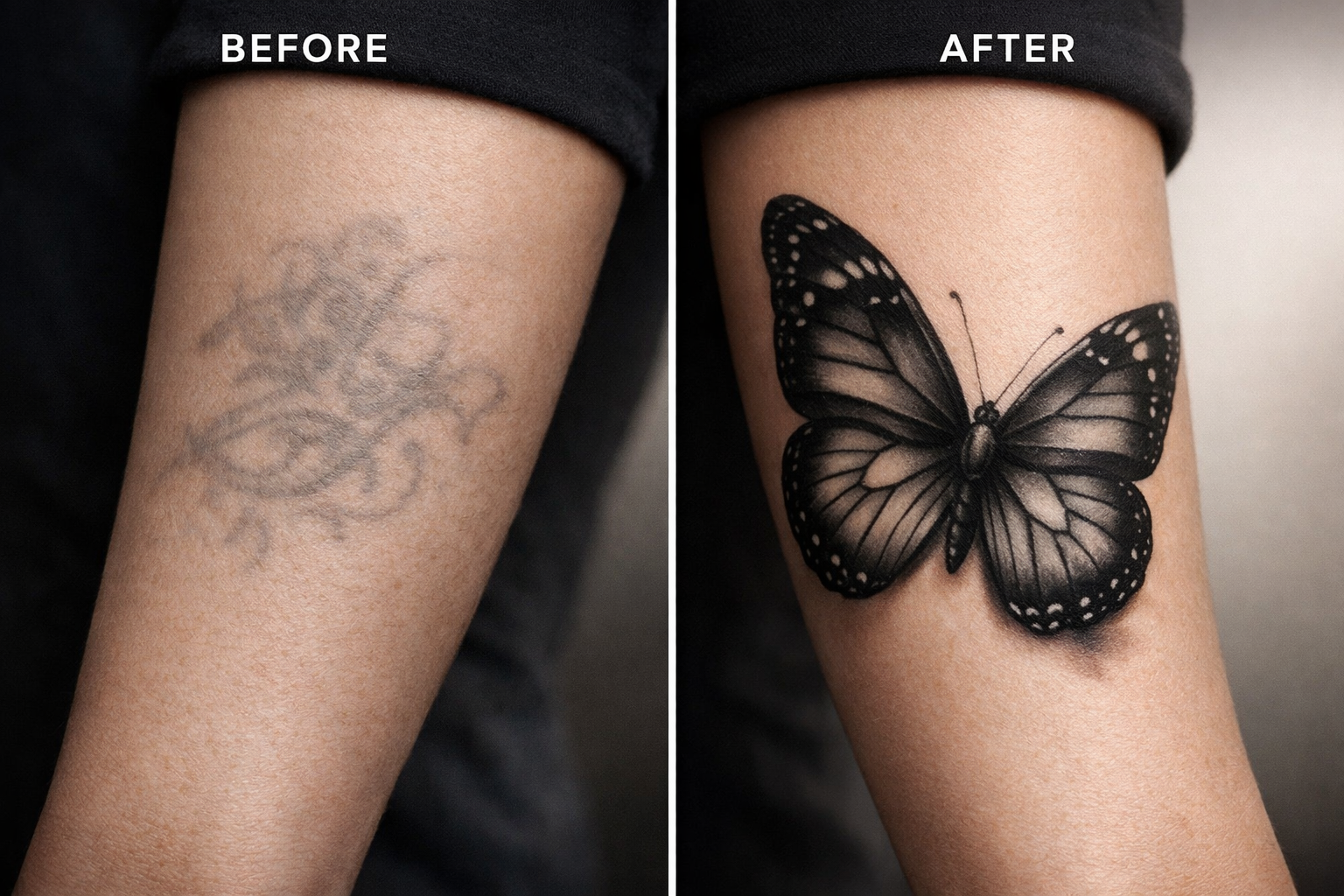
A butterfly tattoo cover up works because the design naturally creates the thing most cover-ups need: layers. Wings can carry soft gradients, high-contrast edges, and detailed texture, exactly what helps distract the eye from what’s underneath.
This guide is for people who already have an older tattoo (or a tattoo they regret) and want to rework it into a butterfly piece that feels intentional, modern, and wearable.
Quick take (5-bullet summary)
A butterfly tattoo can be a strong cover-up choice because wings allow shading and texture to hide old lines.
The darker and bolder your old tattoo is, the more you’ll likely need size, contrast, and strategic placement.
Black & grey realism and realism are often the best styles for hiding old ink cleanly.
The best cover-ups start with a good consult: clear photos, honest details, and realistic expectations.
Aftercare matters even more with cover-ups. Healing well keeps the new design crisp and unified.
What a butterfly tattoo cover up is (and why butterflies work)
A cover-up doesn’t “erase” the old tattoo, it rebuilds the visual story so the new design becomes what your eye reads first.
Butterflies are especially effective because:
Wing symmetry helps re-balance awkward shapes
Gradient shading can soften old harsh lines
Texture and pattern (veins, scales, stippling) can camouflage underlying ink
Background elements (smoke, florals, soft shadows) can extend coverage without looking forced
If you’re here for symbolism instead of cover-ups, use this as your guide: butterfly tattoo meaning and come back when you’re ready to rework old ink.
What can a butterfly cover up?
Cover-ups depend on what you’re covering:
Easier to cover
Thin linework
Faded ink
Small symbols
Light script
Harder to cover (still possible, but needs strategy)
Dense black areas
Heavy tribal / thick outlines
Large saturated color
Old scars or raised texture (requires a careful consult and may not be suitable for everyone)
If you’re not sure which category yours falls into, a consult is the fastest way to get a real answer.
10 butterfly tattoo cover-up design strategies (that look intentional)
Single large butterfly with layered shading
Best when the old tattoo sits in one area (like a small cluster or name).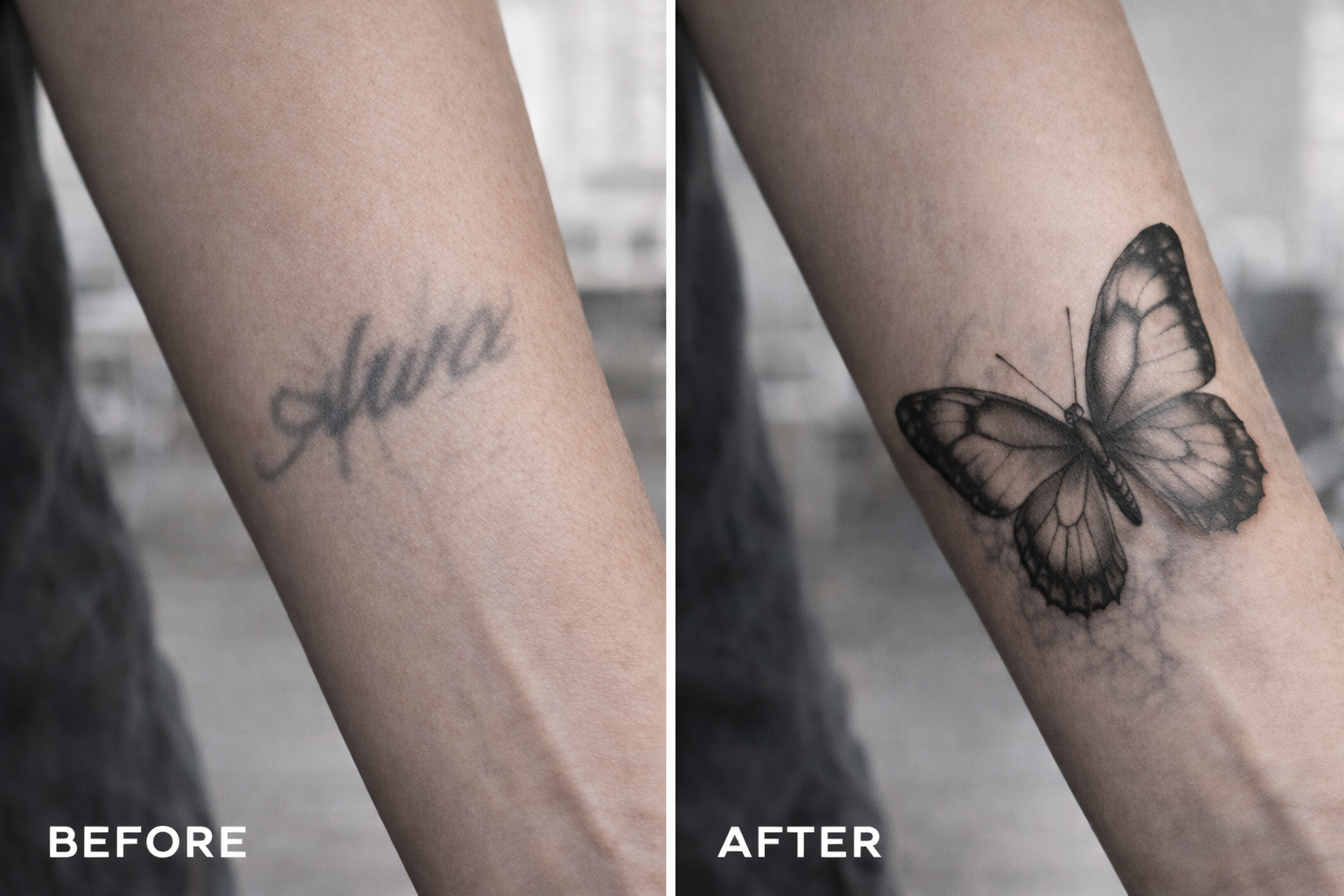
Two butterflies (one “hero,” one supporting)
Great when you need coverage across a wider shape without making one butterfly oversized.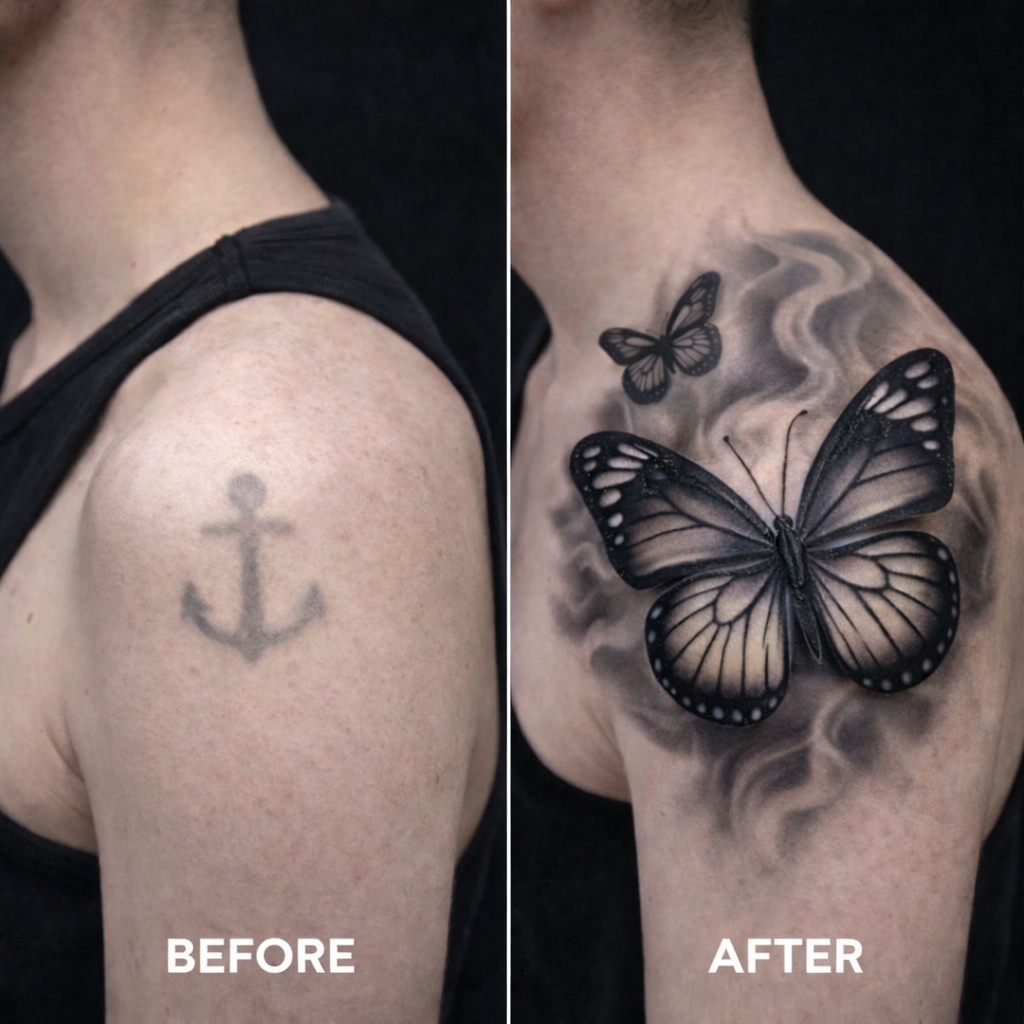
Butterfly + floral cover-up (peony, rose, cherry blossom)
Flowers add natural coverage and soft transitions around the old tattoo.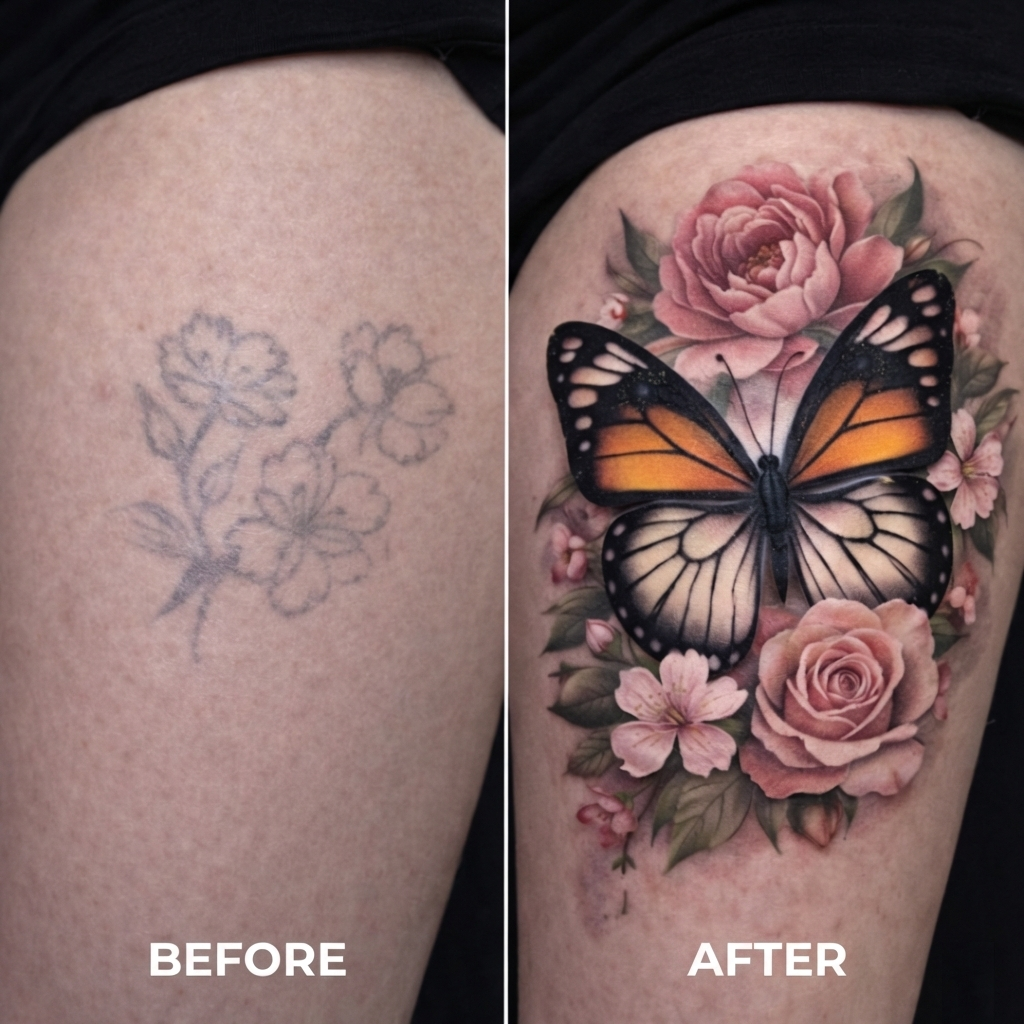
Black & grey realism butterfly
One of the most effective approaches for hiding older ink with depth and shadow.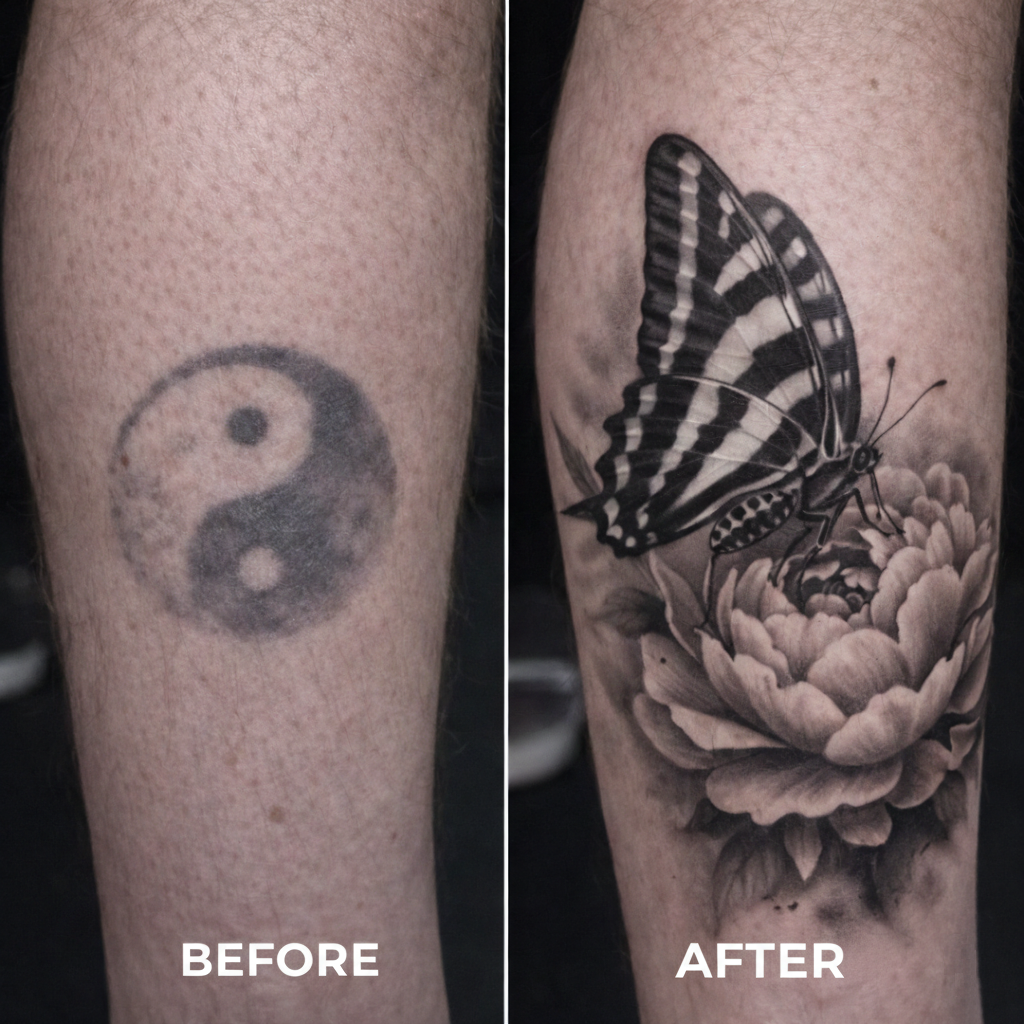
Butterfly wing close-up (macro style)
Works when the old tattoo has uneven geometry. Macro wings let you control attention.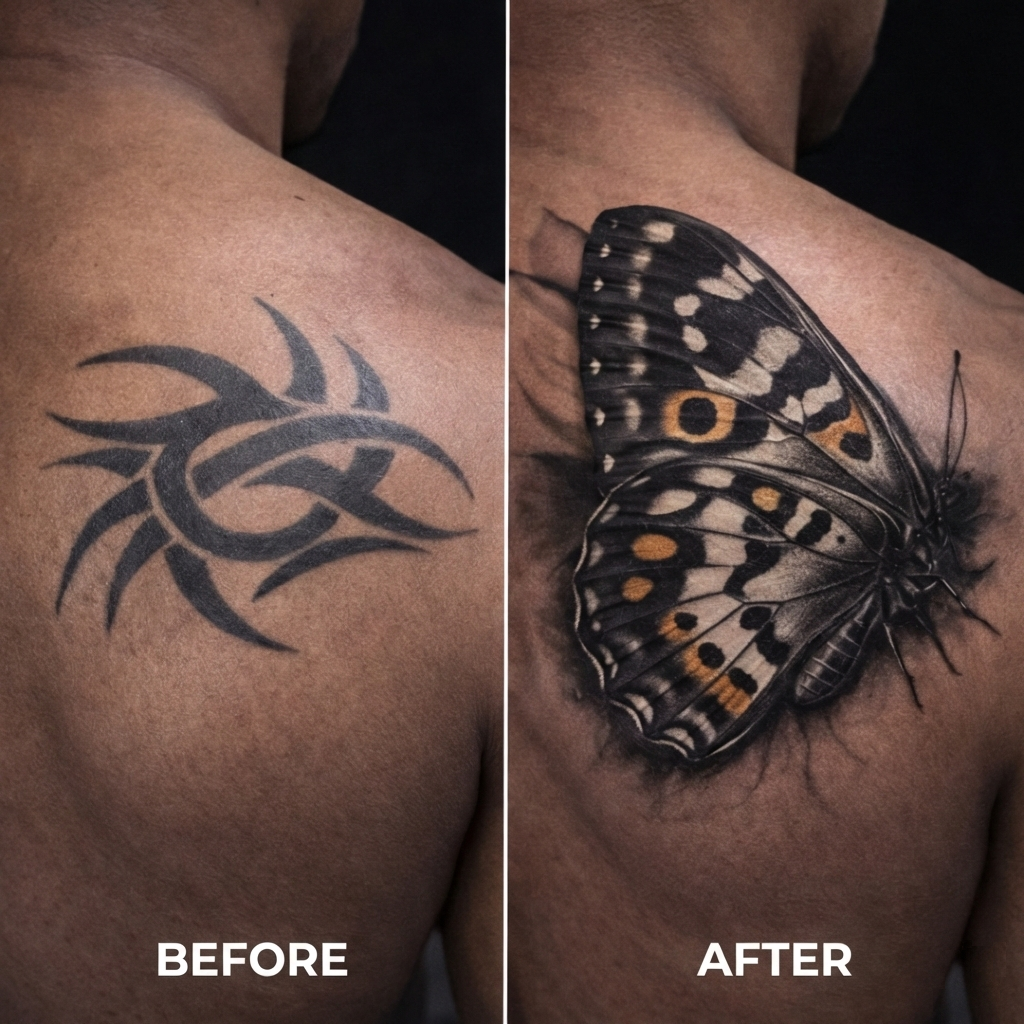
Butterfly with smoky background / soft shadow
Ideal for older tattoos that “peek” at the edges. Background can unify the area.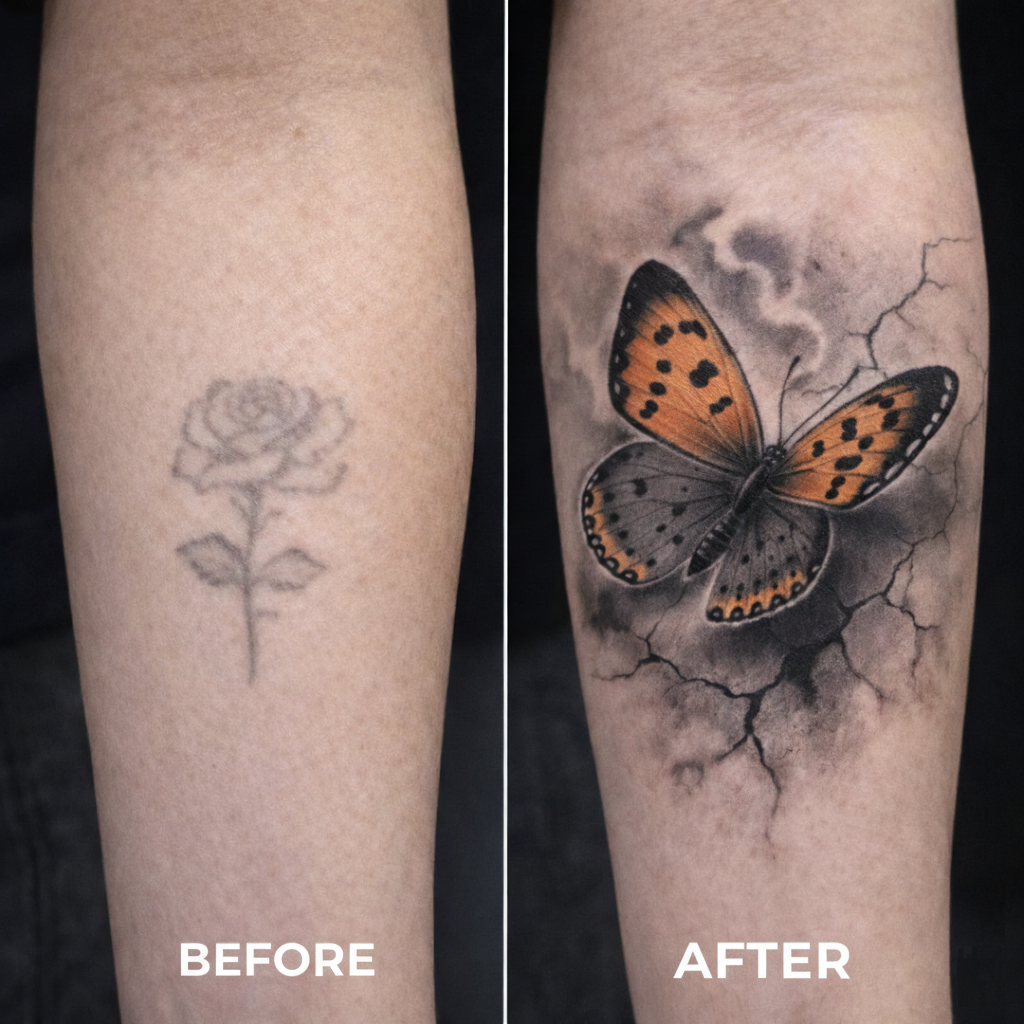
Neo-traditional butterfly with bold outline + solid shading
Good for covering bold old linework because it fights “like with like.”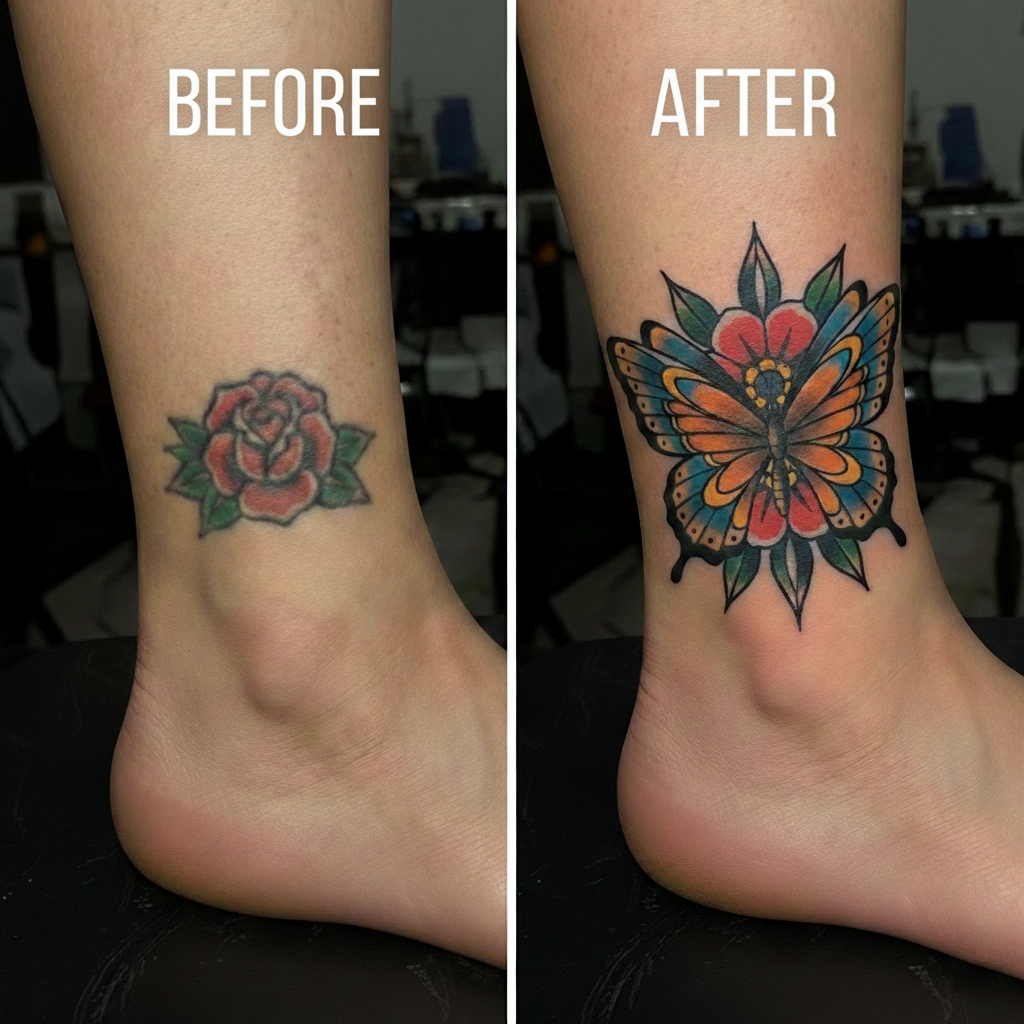
Butterfly + ornamental frame
A frame (filigree/mandala-style) can disguise odd borders and make it look designed.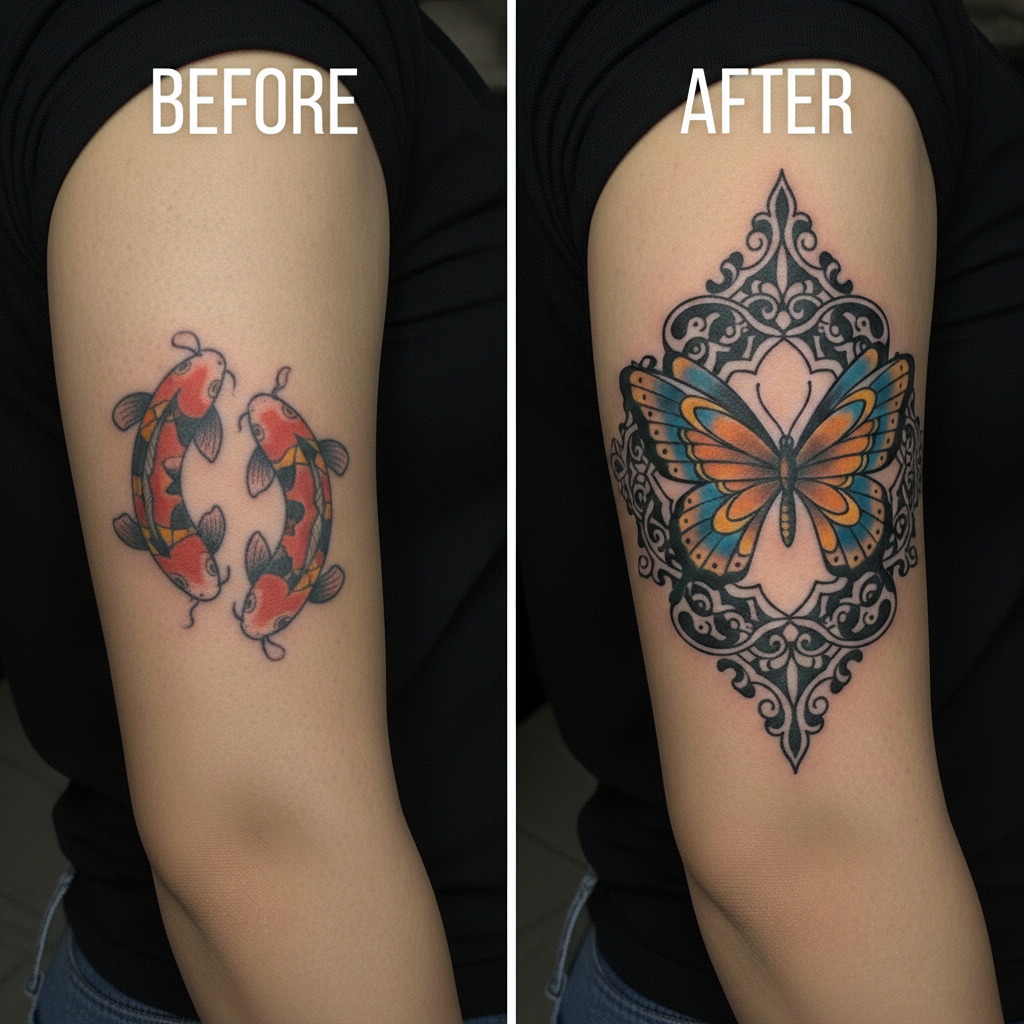
Butterfly + geometric shapes
Sharp geometry can hide awkward old angles while the butterfly stays the focal point.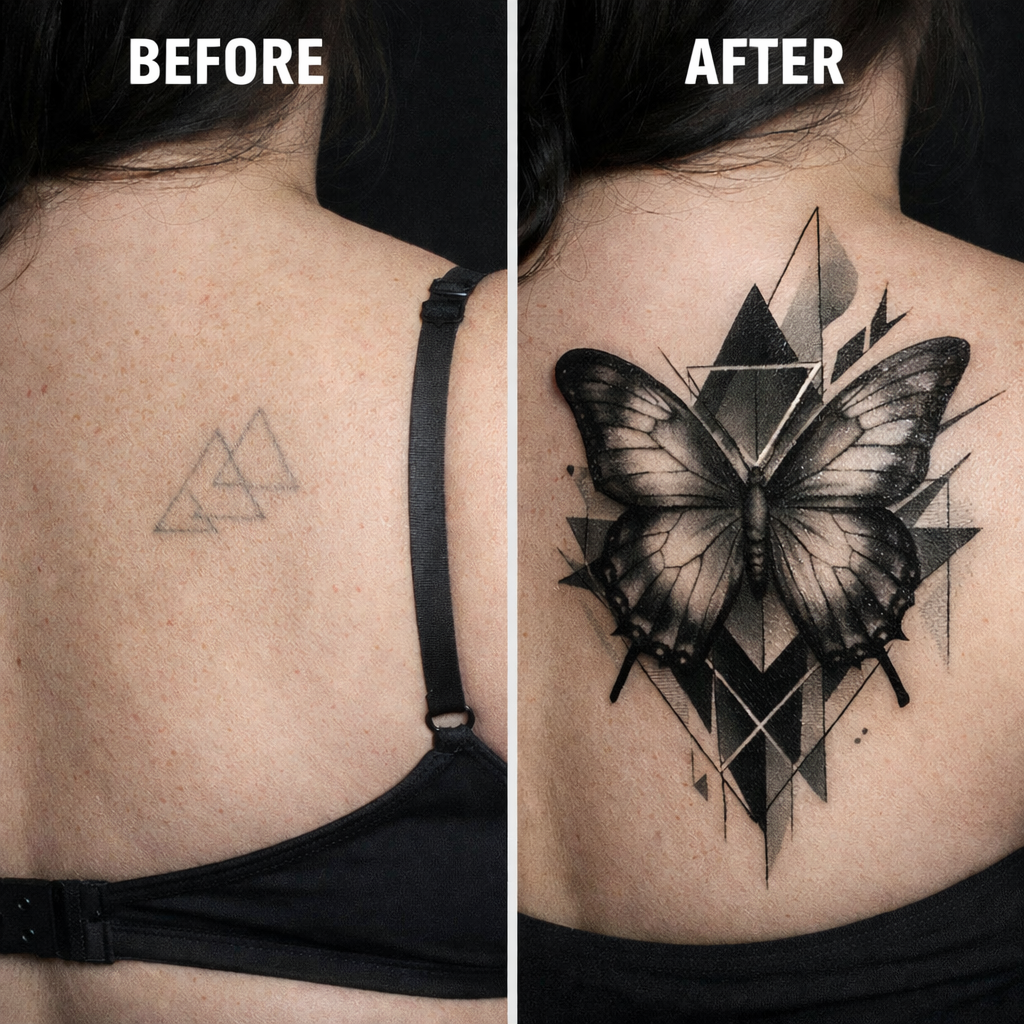
Butterfly “flight trail” (small to larger butterflies)
Helps cover elongated shapes and makes the composition feel dynamic.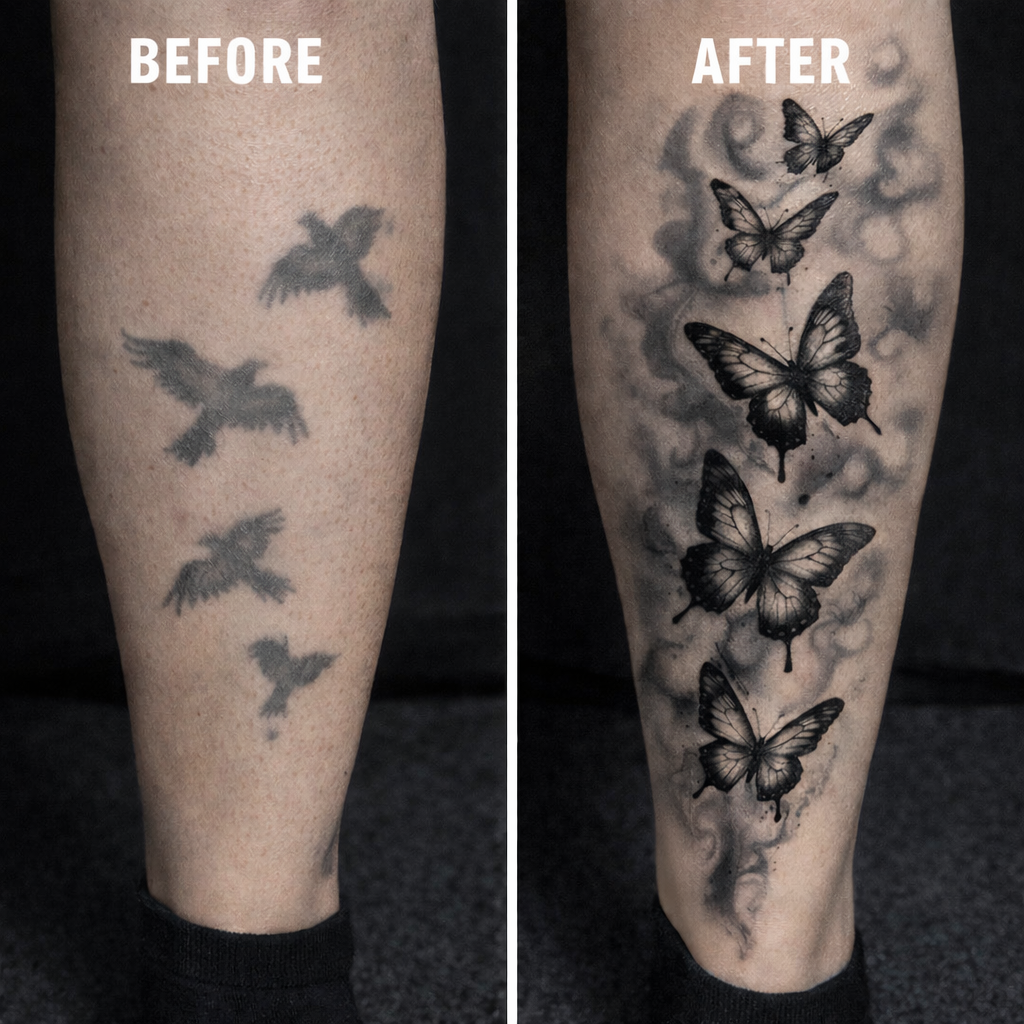
Styles that hide old ink best
If your goal is “I don’t want to see the old tattoo anymore,” these styles are usually strongest:
Black & Grey Realism: high control with contrast and shading
Realism: lifelike texture that naturally distracts from what’s underneath
Illustrative / Neo-traditional: bold structure that can overpower old linework
Want to explore style references before you book?
Realism: https://inknationstudio.com/tattoo-styles/realism-tattoos/
Artists: https://inknationstudio.com/artists/
How to prep for a cover-up consultation (bring this checklist)
To get the best plan quickly:
A clear photo in natural light (no filters)
Approximate age of the tattoo (newer ink behaves differently than older ink)
Any previous rework attempts
What you hate about it (shape, placement, style, meaning)
What you want instead (vibe, style, size range, color vs black & grey)
3–5 inspiration references (what you like and what you don’t)
What to expect (timeline)
1) Consultation and feasibility
Your artist will assess darkness, size, and placement, and tell you what’s realistic.
2) Concept + strategy
This is where good cover-ups are won: contrast planning, wing placement, and background decisions.
3) Tattoo session (sometimes multiple sessions)
Some cover-ups can be done in one session; others need more time depending on saturation and detail.
4) Healing and aftercare
Aftercare keeps the new design crisp and helps it settle evenly. Use the studio’s aftercare guidance:
https://inknationstudio.com/everything-you-need-to-know-about-tattoo-aftercare/
If you notice unusual swelling, spreading redness, fever, or worsening pain, seek medical care promptly.
Common mistakes with butterfly tattoo cover-ups
Choosing a design that’s too small (old ink will show through)
Going too light when the old tattoo is dark
Not disclosing what’s under there (touch-ups, blown-out lines, prior cover-ups)
Over-detailing fine line on top of heavy old ink
Skipping the background when you actually need it to unify the cover-up
Rushing aftercare (cover-ups need clean healing to look seamless)
FAQ
Can a butterfly tattoo cover up a name?
Often, yes, especially if the script is faded or thin. Size and shading strategy matter.
Do I need laser first?
Not always. Some tattoos cover well as-is; others benefit from lightening first. A consult can tell you quickly.
Will the old tattoo show through?
A good cover-up aims to make the old tattoo unnoticeable, but results depend on ink density, placement, and design choices.
Can a cover-up butterfly be done in fine line?
Sometimes, if the old tattoo is light and small. For darker ink, styles with more shading are usually better.
How big does a butterfly cover-up need to be?
Most cover-ups need to be larger than the original to control attention and coverage.
Can you tattoo over scars?
It depends on the scar type, texture, and how healed it is. A consult is necessary, and not every scar is a good candidate.
Ready to explore a butterfly tattoo cover up in NYC?
Start here (cover-up specialists + examples):
https://inknationstudio.com/tattoo-cover-up-nyc/
Book a consultation:
https://inknationstudio.com/book-now/
Inknation Studio
56 W 45th St, Fl 18, New York, NY 10036, United States
(917) 261-6936
Hours: 11:00 AM – 6:00 PM every day (Mon–Sun)