Butterfly Tattoo Cover Up Ideas: Turn Old Ink Into Something You Love

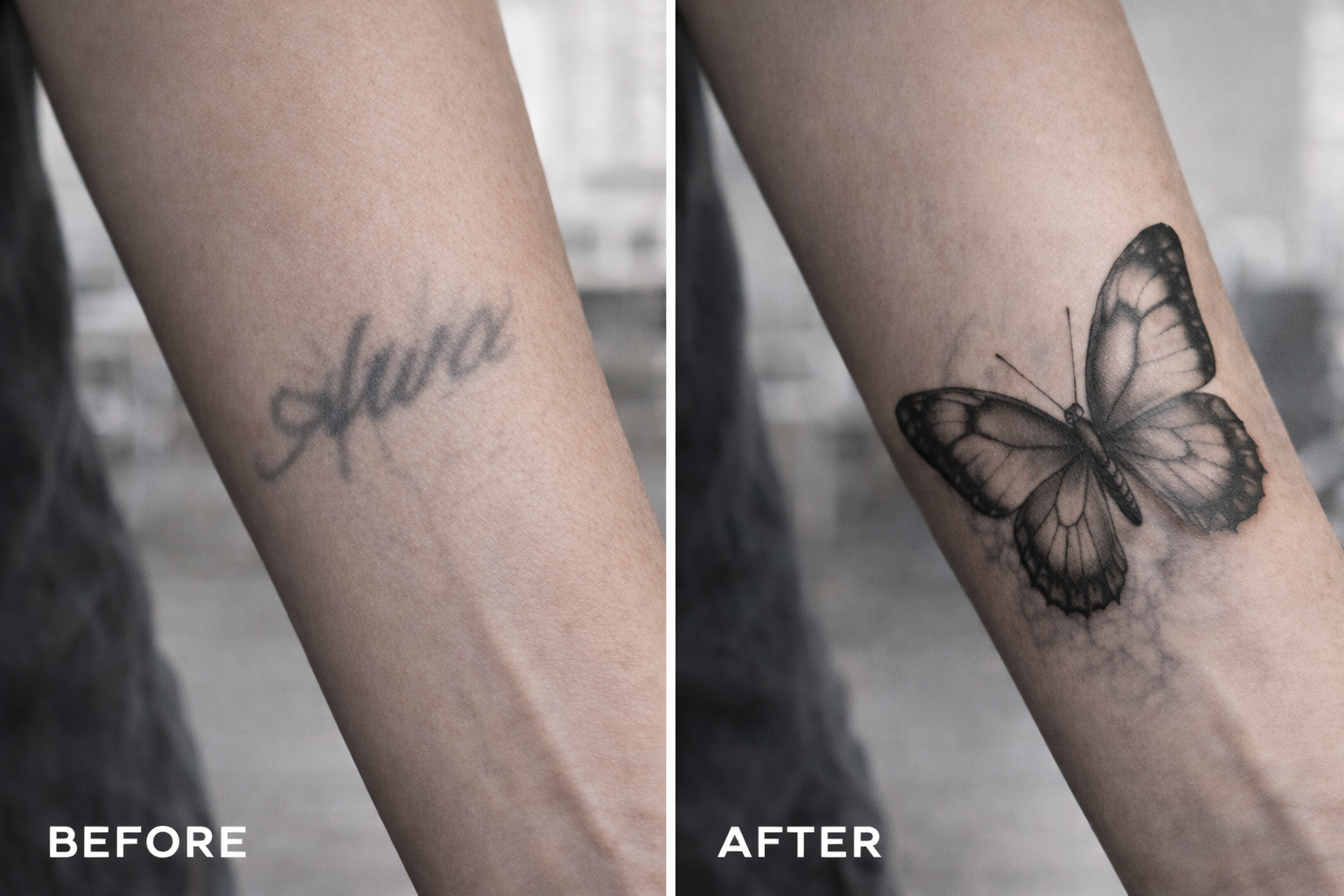
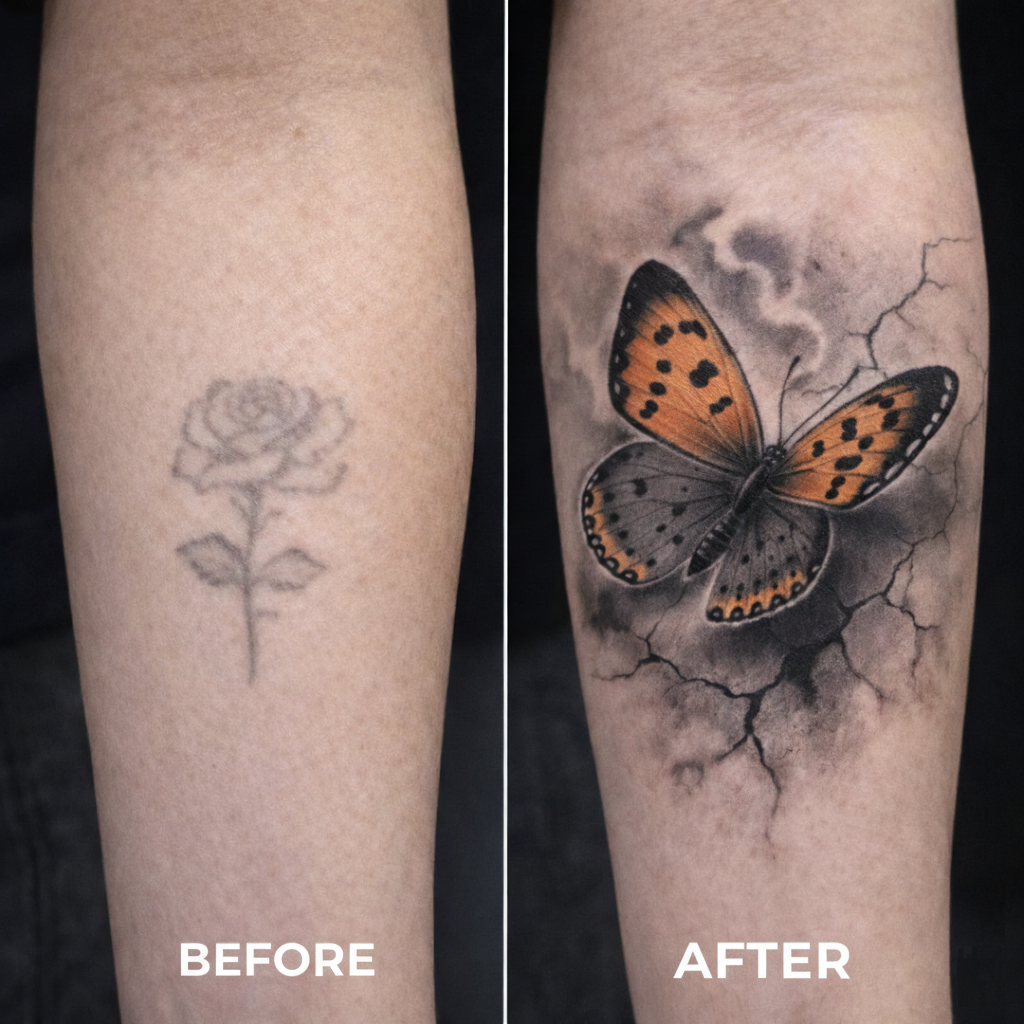
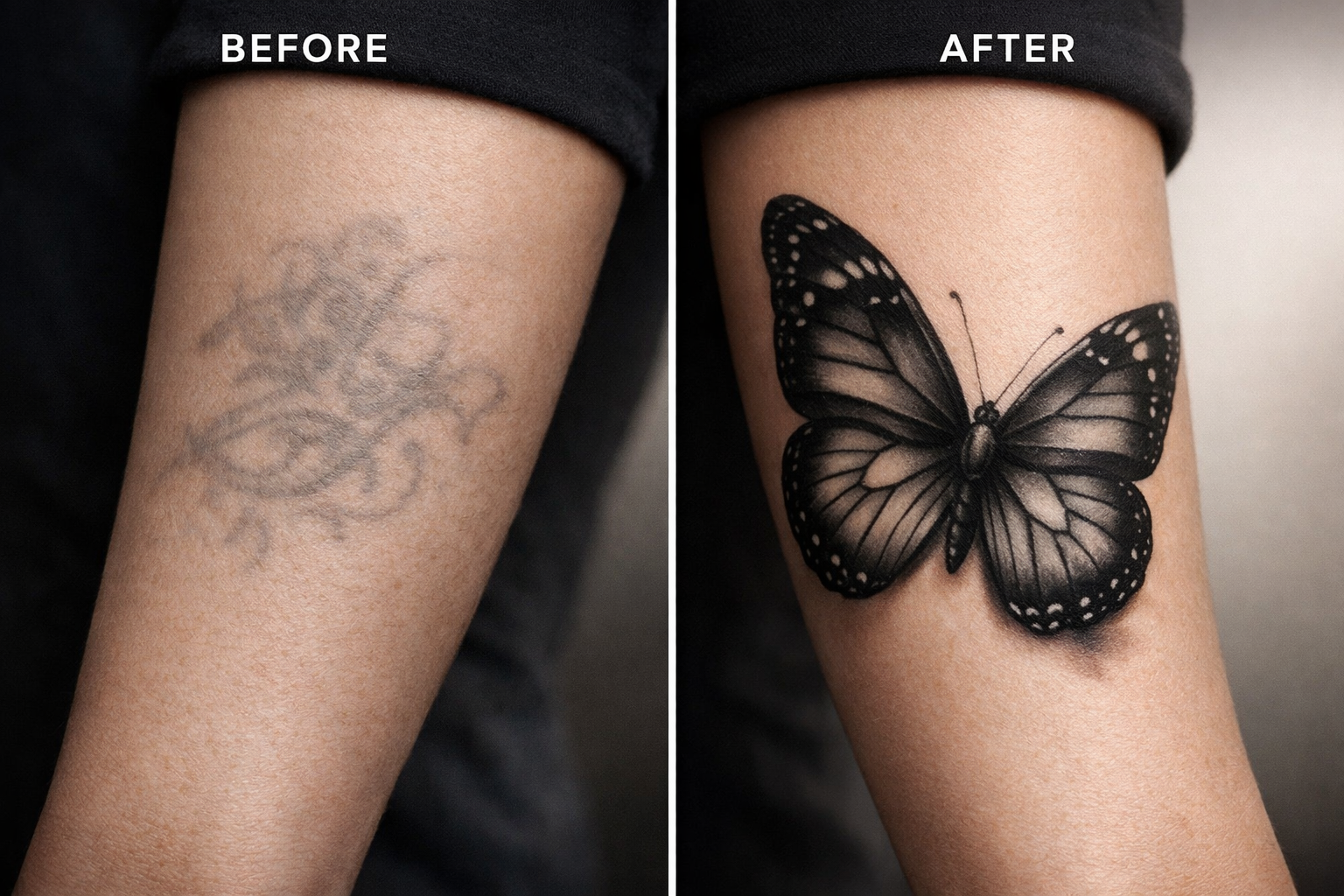
Before and after tattoo cover up: faded forearm tattoo transformed into a black and grey butterfly

A butterfly tattoo cover up works because the design naturally creates the thing most cover-ups need: layers. Wings can carry soft gradients, high-contrast edges, and detailed texture—exactly what helps distract the eye from what’s underneath.

This guide is for people who already have an older tattoo (or a tattoo they regret) and want to rework it into a butterfly piece that feels intentional, modern, and wearable.

Quick take (5-bullet summary)

  • A butterfly tattoo can be a strong cover-up choice because wings allow shading and texture to hide old lines.

  • The darker and bolder your old tattoo is, the more you’ll likely need size, contrast, and strategic placement.

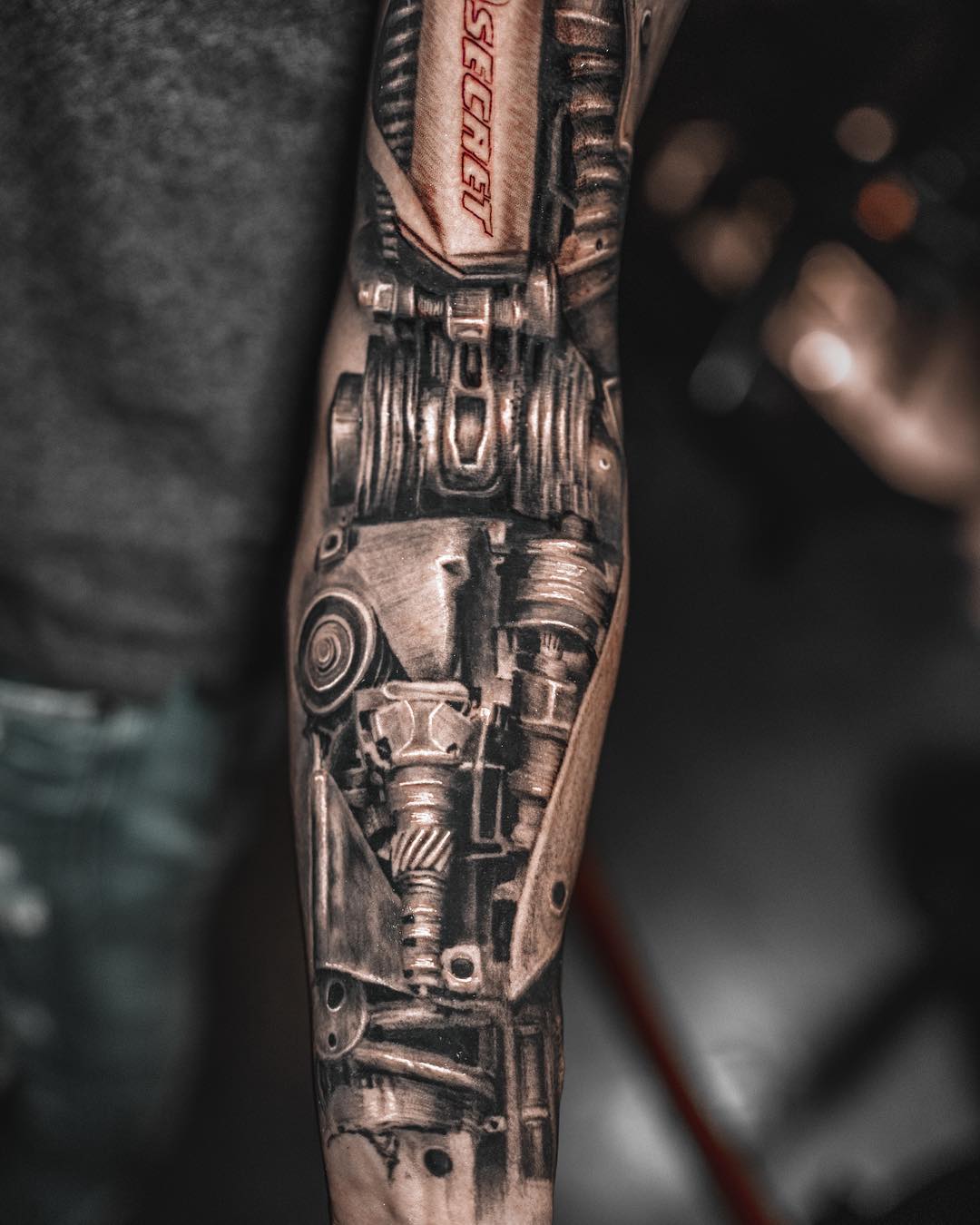
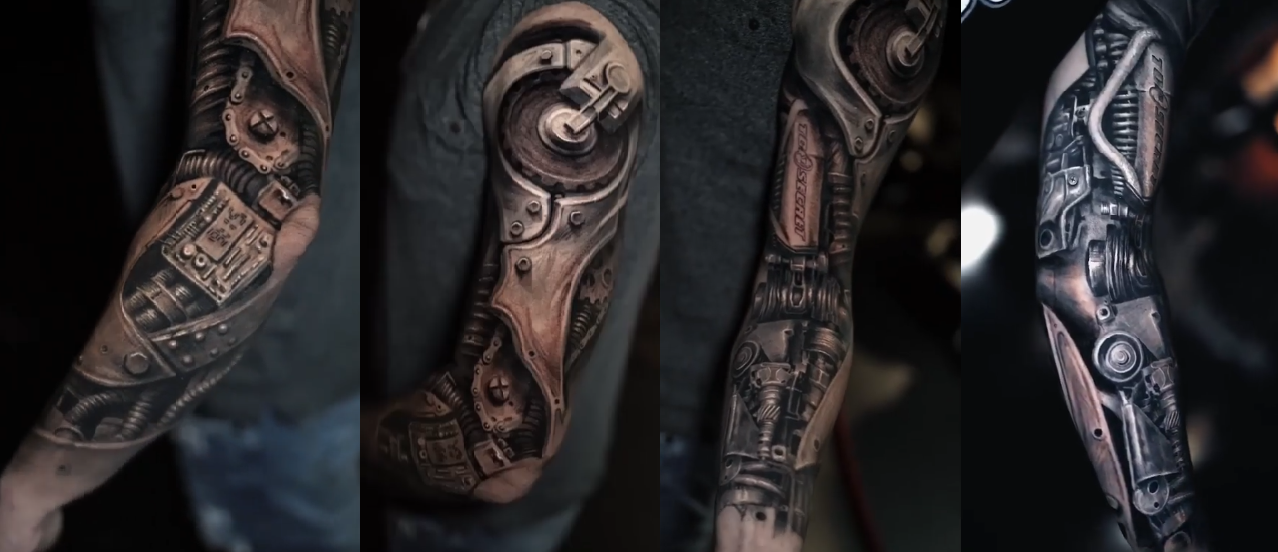
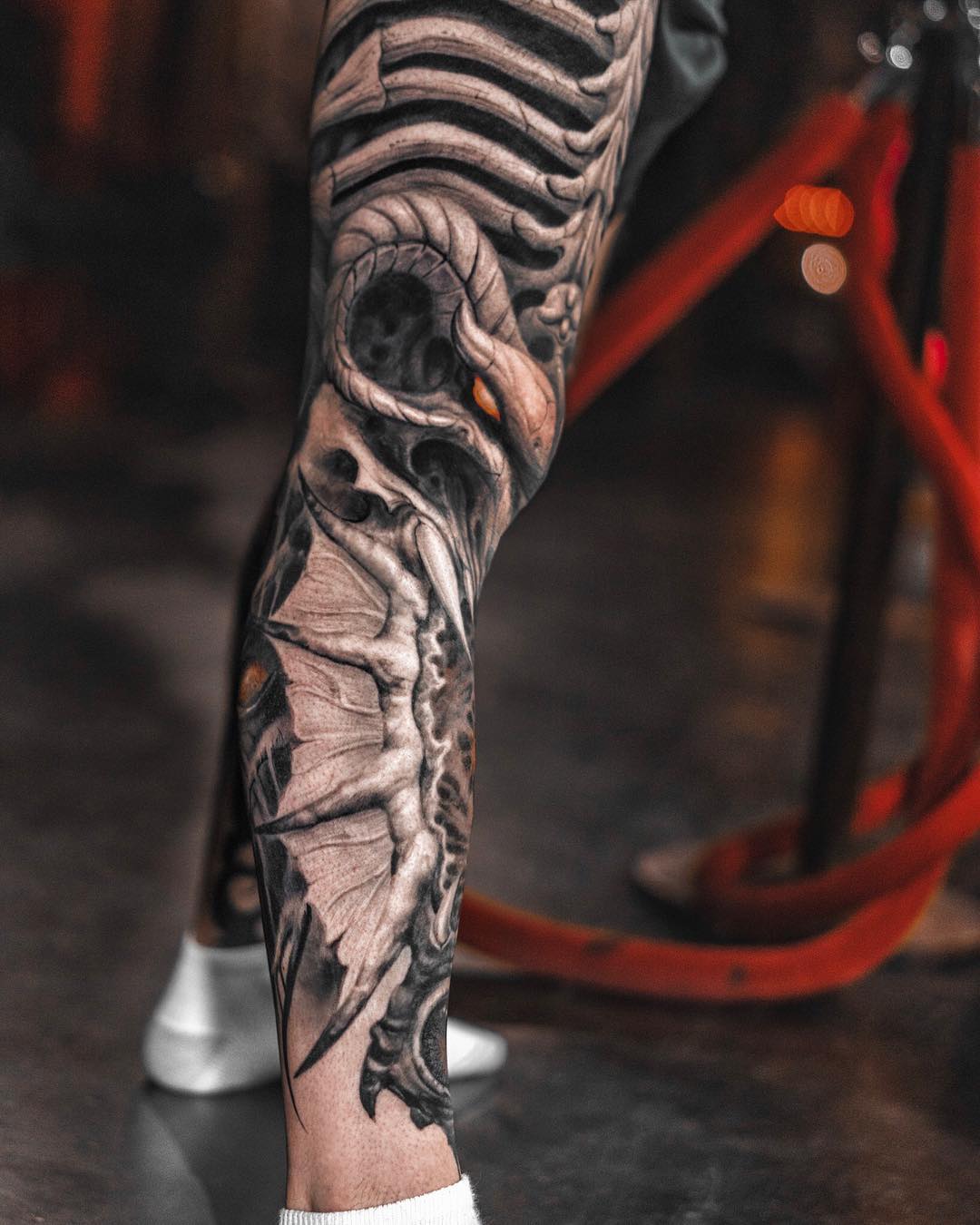
  • Black & grey realism and realism are often the best styles for hiding old ink cleanly.

  • The best cover-ups start with a good consult: clear photos, honest details, and realistic expectations.

  • Aftercare matters even more with cover-ups—healing well keeps the new design crisp and unified.


What a butterfly tattoo cover up is (and why butterflies work)

A cover-up doesn’t “erase” the old tattoo—it rebuilds the visual story so the new design becomes what your eye reads first.

Butterflies are especially effective because:

  • Wing symmetry helps re-balance awkward shapes

  • Gradient shading can soften old harsh lines

  • Texture and pattern (veins, scales, stippling) can camouflage underlying ink

  • Background elements (smoke, florals, soft shadows) can extend coverage without looking forced

If you’re here for symbolism instead of cover-ups, use this as your guide: butterfly tattoo meaning (linked here) — and come back when you’re ready to rework old ink.


What can a butterfly cover up?

Cover-ups depend on what you’re covering:

Easier to cover

  • Thin linework

  • Faded ink

  • Small symbols

  • Light script

Harder to cover (still possible, but needs strategy)

  • Dense black areas

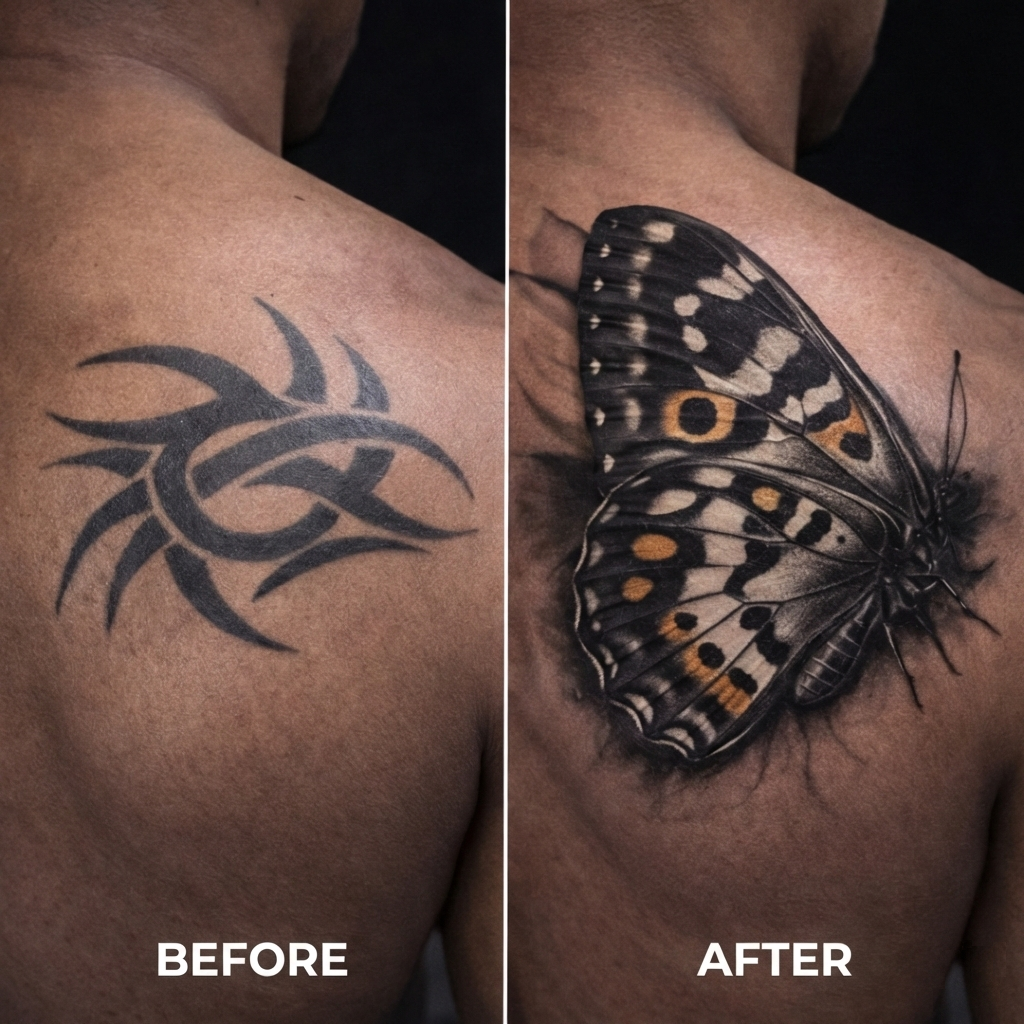
  • Heavy tribal / thick outlines

  • Large saturated color

  • Old scars or raised texture (requires a careful consult and may not be suitable for everyone)

If you’re not sure which category yours falls into, a consult is the fastest way to get a real answer.


10 butterfly tattoo cover-up design strategies (that look intentional)

  1. Single large butterfly with layered shading
    Best when the old tattoo sits in one area (like a small cluster or name).
    Tattoo transformation from script to butterfly tattoo by Inknation Studio NYC.realism-tattoo-arm

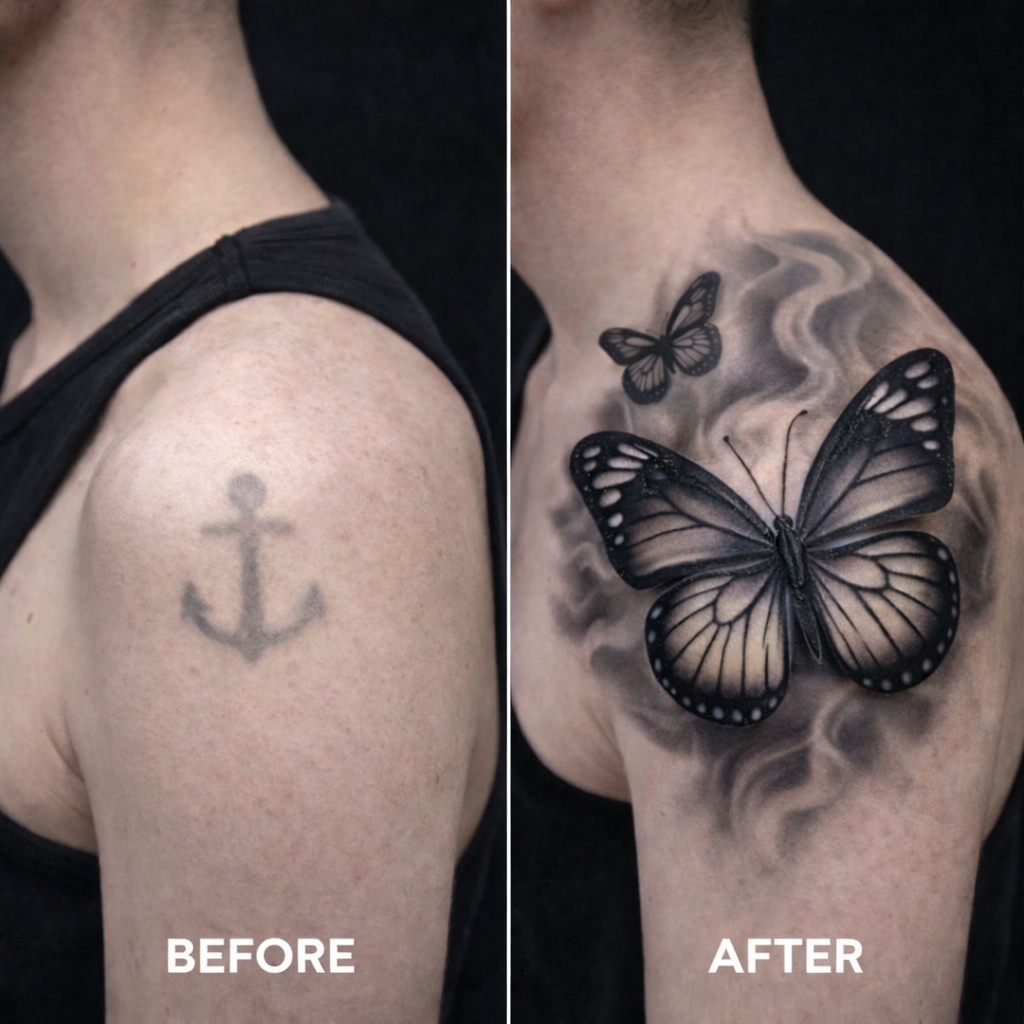
  2. Two butterflies (one “hero,” one supporting)
    Great when you need coverage across a wider shape without making one butterfly oversized.

    Before and after of a shoulder tattoo cover-up: a faded anchor tattoo replaced by a large, hyper-realistic black and grey butterfly with smoky shading.

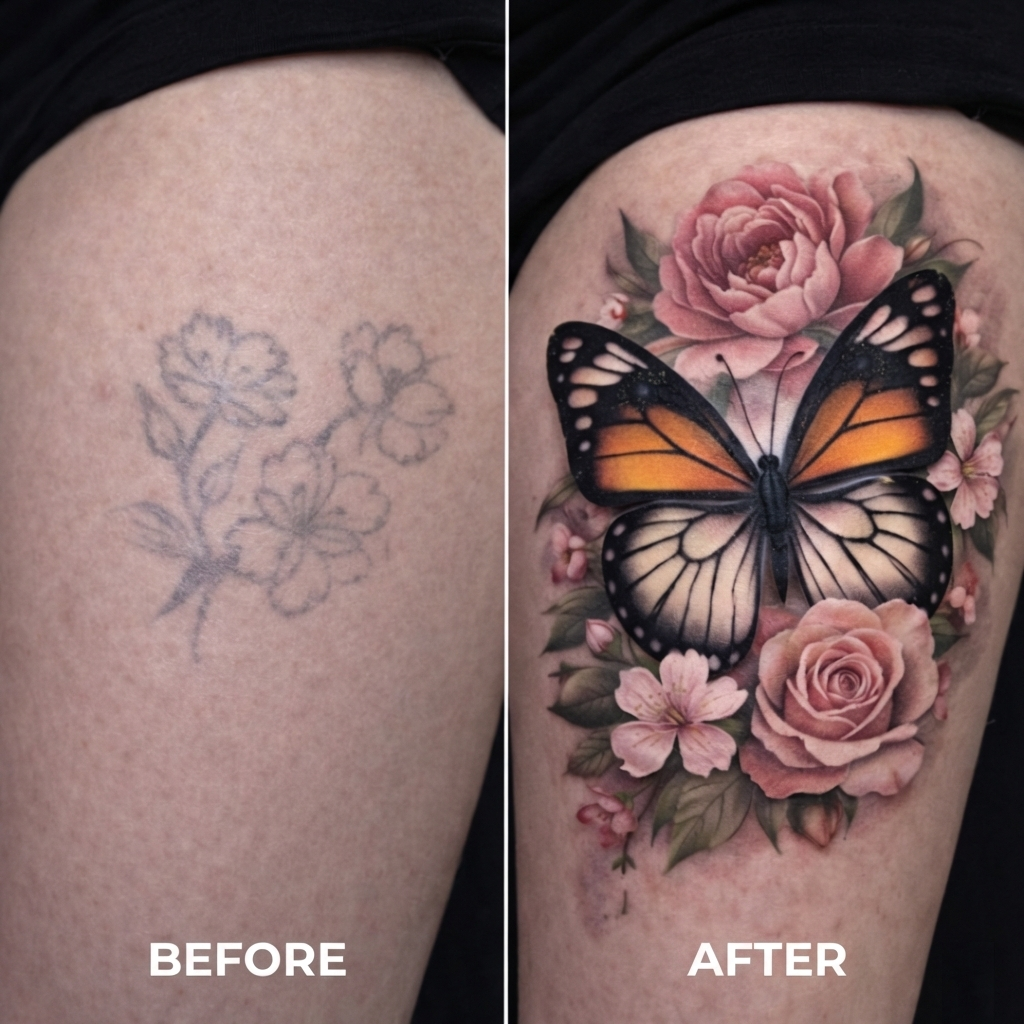
  3. Butterfly + floral cover-up (peony, rose, cherry blossom)
    Flowers add natural coverage and soft transitions around the old tattoo.

    Before and after of a floral tattoo cover-up: faded simple flowers replaced by a vibrant, realistic monarch butterfly and detailed pink roses

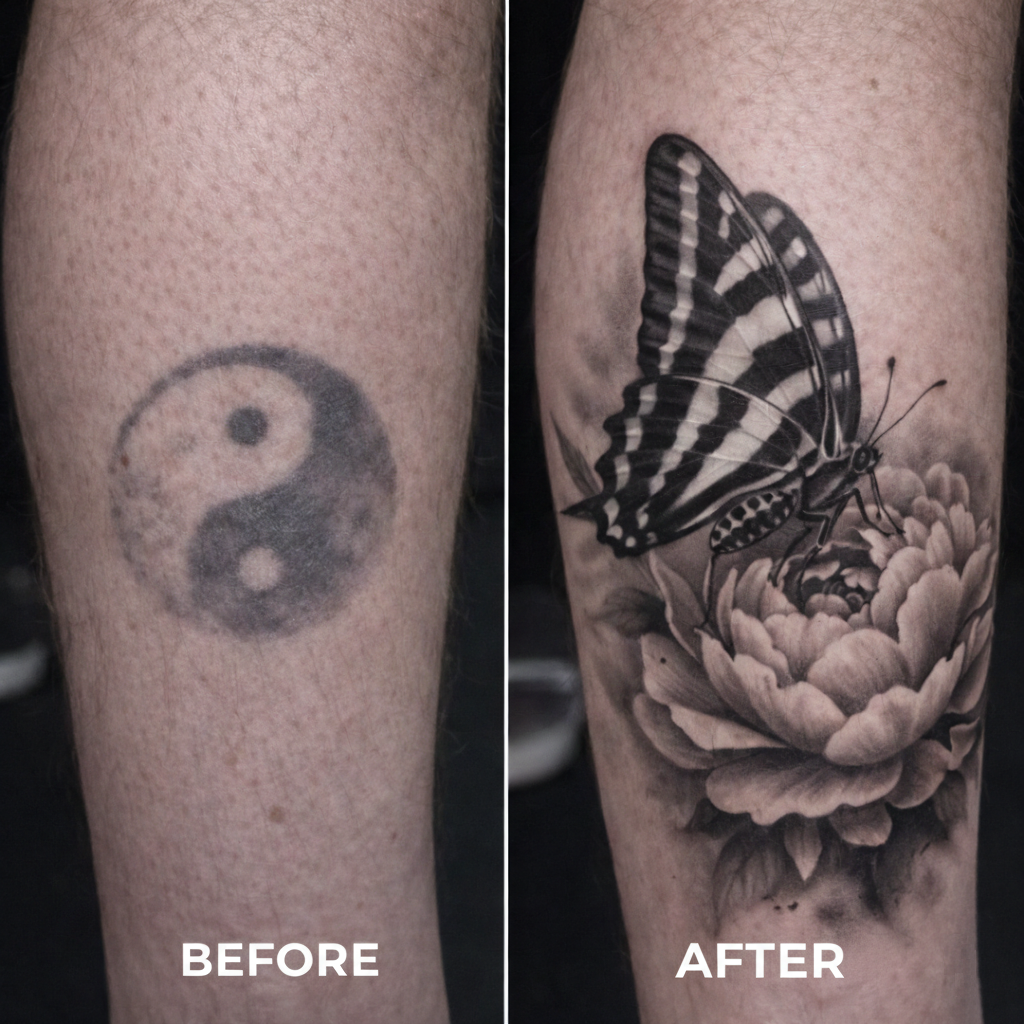
  4. Black & grey realism butterfly
    One of the most effective approaches for hiding older ink with depth and shadow.

    Before and after of a leg tattoo cover-up: a faded black yin-yang symbol replaced by a highly detailed striped butterfly resting on a large peony flower in black and grey realism

  5. Butterfly wing close-up (macro style)
    Works when the old tattoo has uneven geometry—macro wings let you control attention.

    Before and after of a shoulder tattoo cover-up: an old black tribal tattoo covered by a large realistic black and grey butterfly with 3D effects.

  6. Butterfly with smoky background / soft shadow
    Ideal for older tattoos that “peek” at the edges—background can unify the area.

    Before and after of an arm tattoo cover-up: a light, faded rose outline replaced by a vibrant orange and black butterfly over a dark, cracked-earth background.

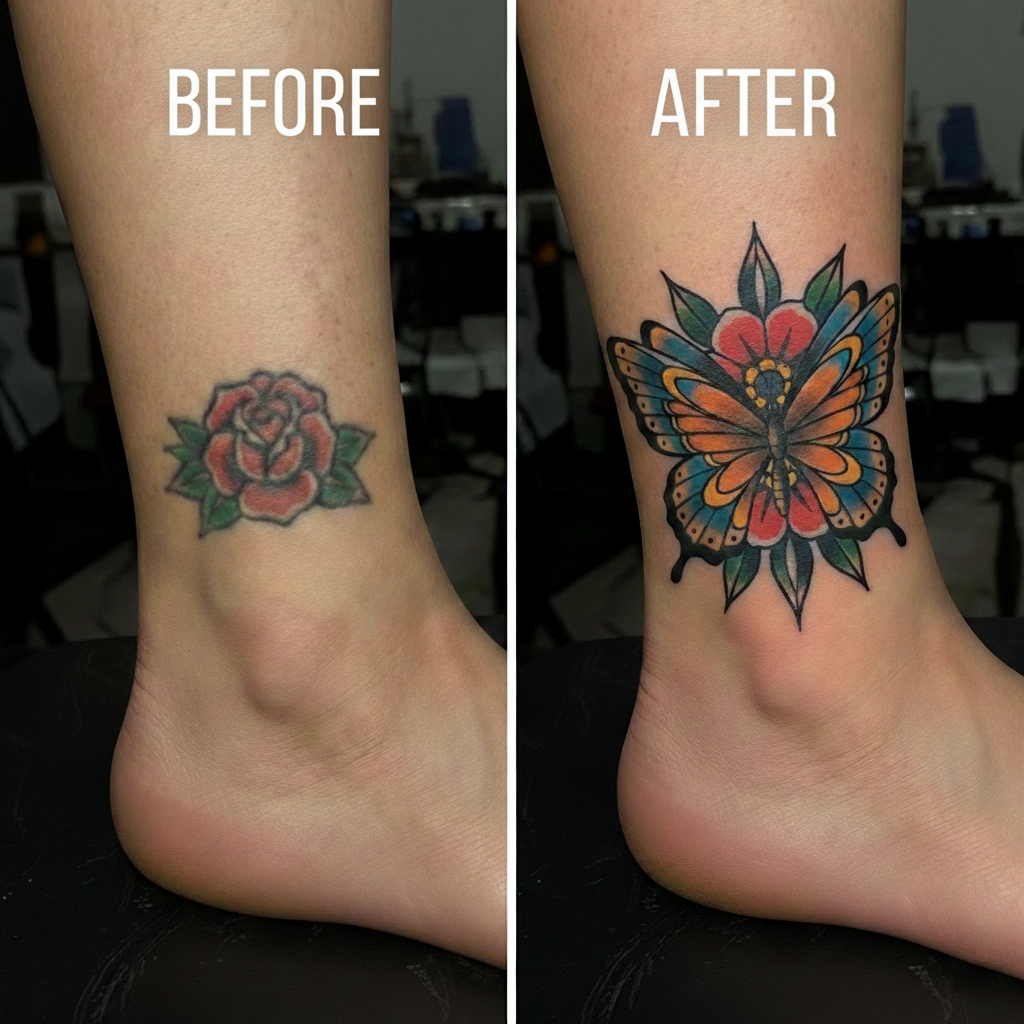
  7. Neo-traditional butterfly with bold outline + solid shading
    Good for covering bold old linework because it fights “like with like.”

    Before and after of an ankle tattoo cover-up: a small red rose replaced by a vibrant traditional-style butterfly with orange, blue, and yellow wings.

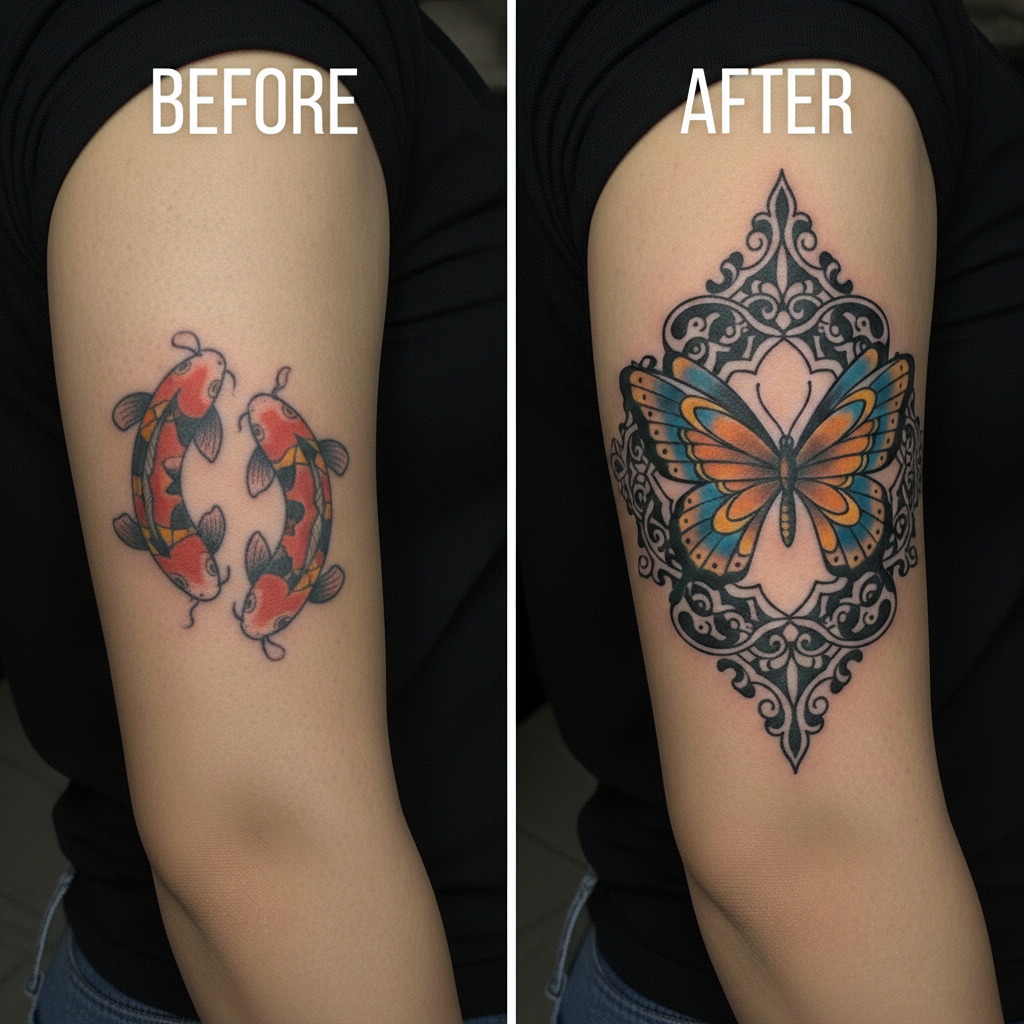
  8. Butterfly + ornamental frame
    A frame (filigree/mandala-style) can disguise odd borders and make it look designed.

    Before and after of an arm tattoo cover-up: two orange koi fish replaced by a traditional butterfly centered within a black ornamental frame.

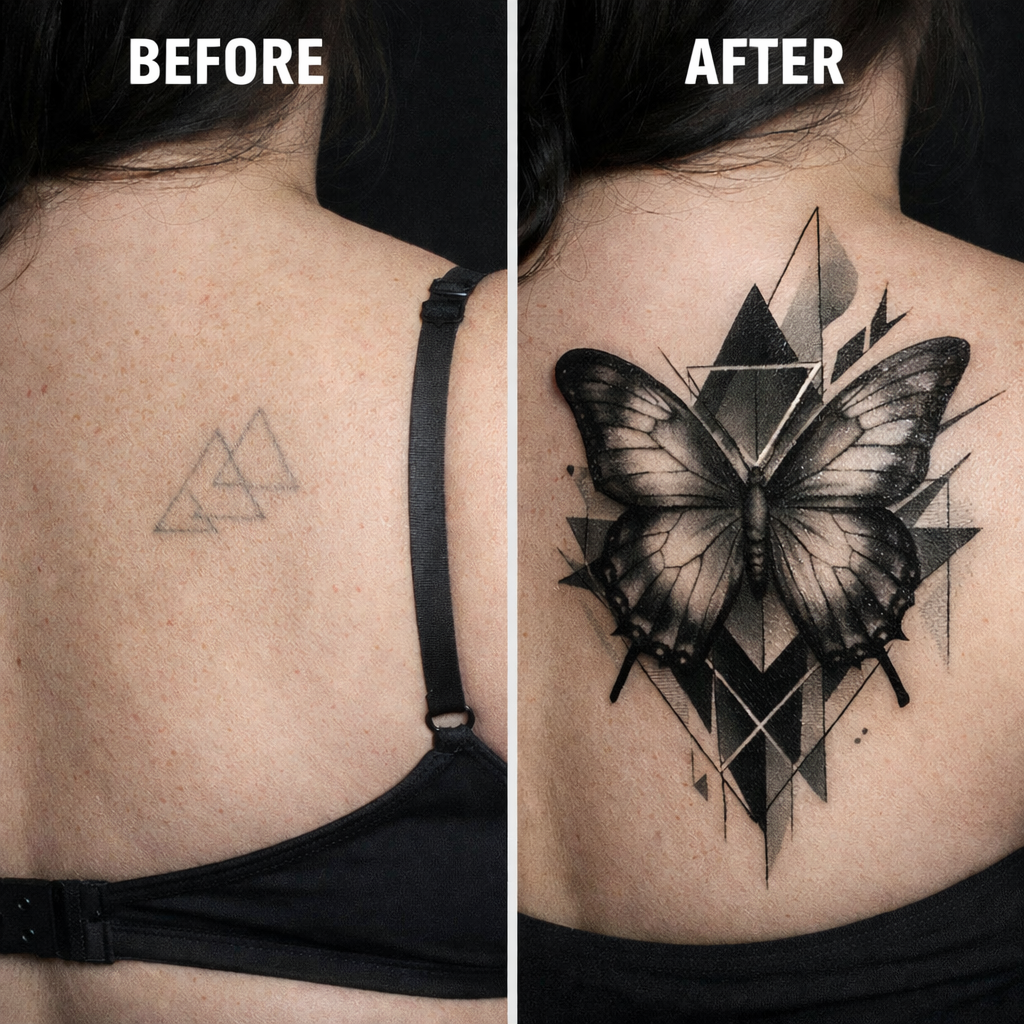
  9. Butterfly + geometric shapes
    Sharp geometry can hide awkward old angles while the butterfly stays the focal point.

    Before and after of a back tattoo cover-up: small geometric triangle outlines replaced by a large, blackwork butterfly integrated with dark geometric patterns.

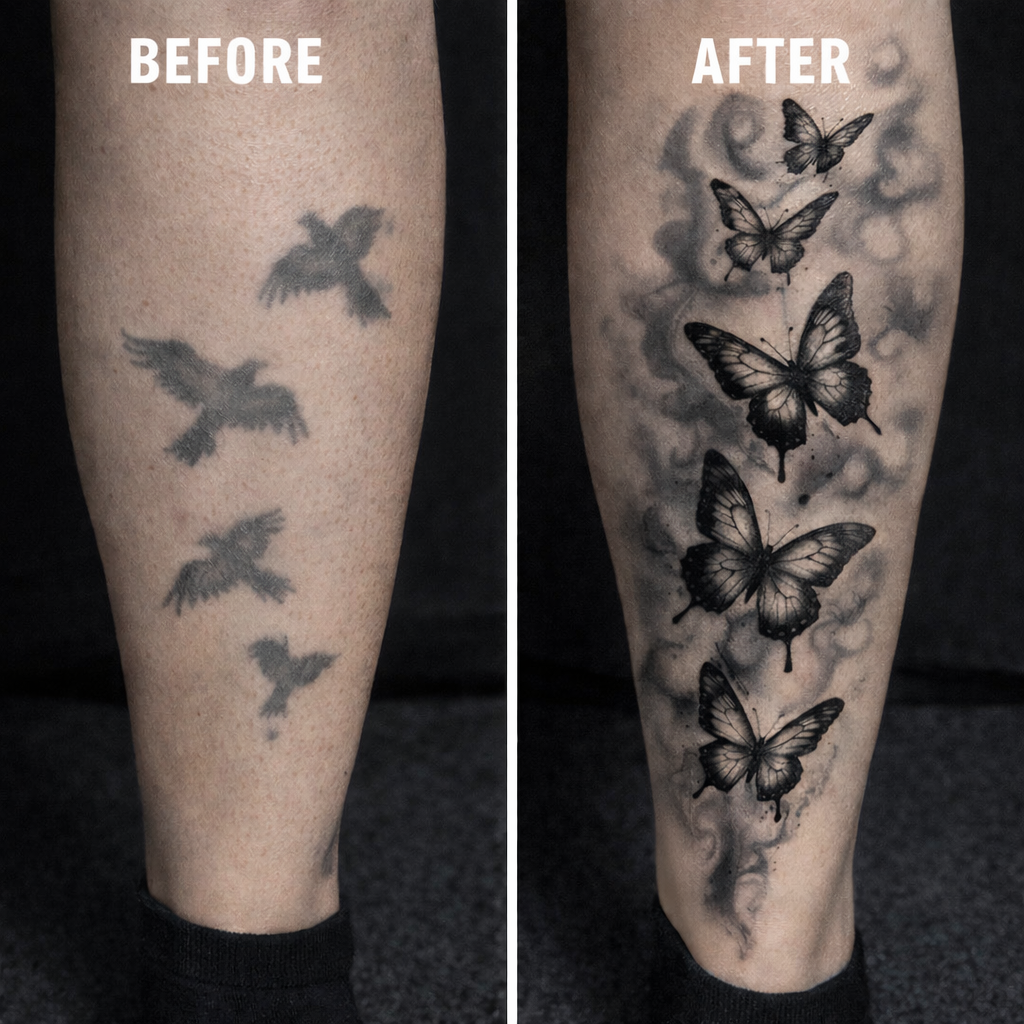
  10. Butterfly “flight trail” (small to larger butterflies)
    Helps cover elongated shapes and makes the composition feel dynamic.

    Before and after of a leg tattoo cover-up: four faded bird silhouettes replaced by five realistic black and grey butterflies with smoke-like background shading.


Styles that hide old ink best

If your goal is “I don’t want to see the old tattoo anymore,” these styles are usually strongest:

  • Black & Grey Realism: high control with contrast and shading

  • Realism: lifelike texture that naturally distracts from what’s underneath

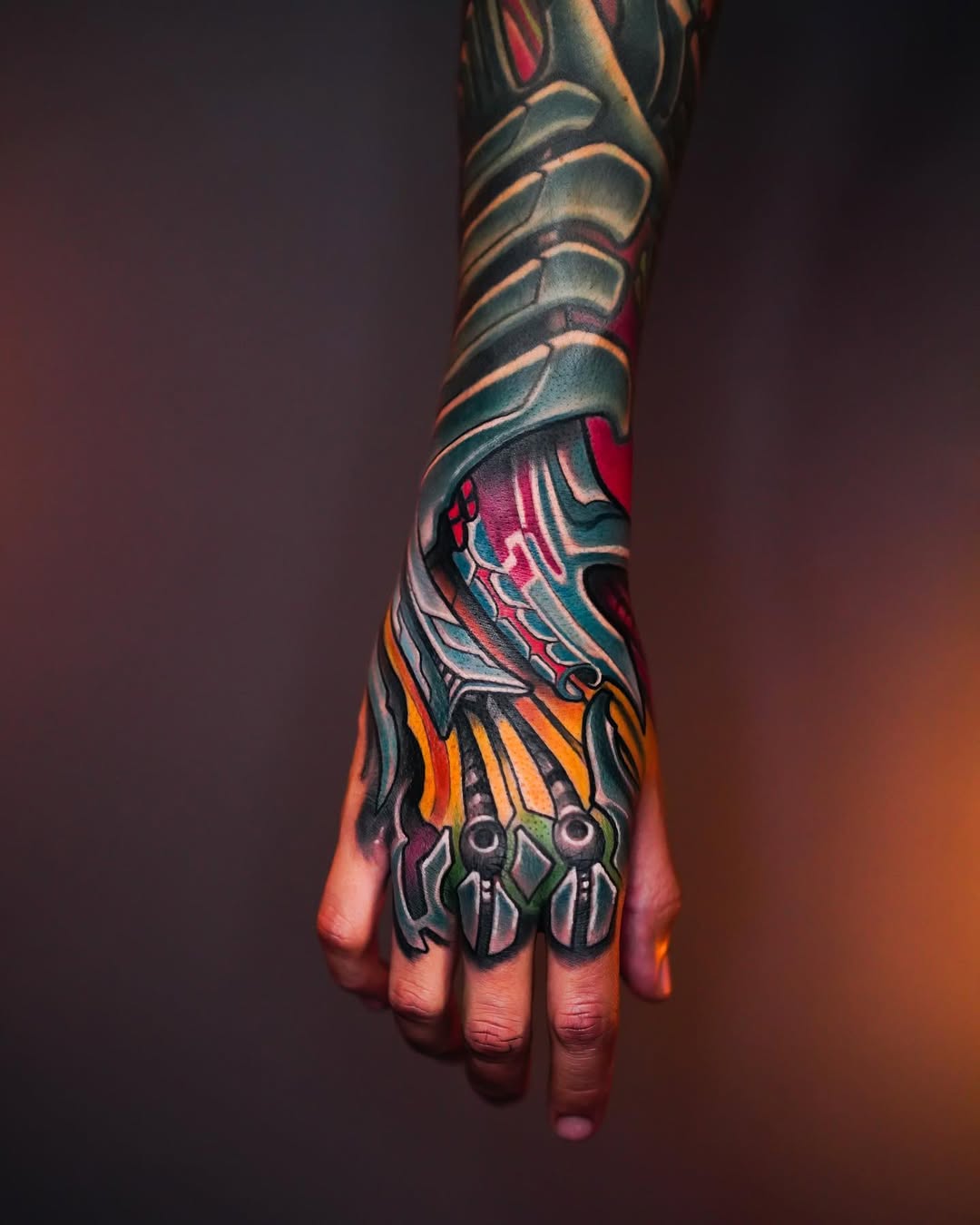
  • Illustrative / Neo-traditional: bold structure that can overpower old linework

Want to explore style references before you book?


How to prep for a cover-up consultation (bring this checklist)

To get the best plan quickly:

  • A clear photo in natural light (no filters)

  • Approximate age of the tattoo (newer ink behaves differently than older ink)

  • Any previous rework attempts

  • What you hate about it (shape, placement, style, meaning)

  • What you want instead (vibe, style, size range, color vs black & grey)

  • 3–5 inspiration references (what you like and what you don’t)


What to expect (timeline)

1) Consultation and feasibility

Your artist will assess darkness, size, and placement—and tell you what’s realistic.

2) Concept + strategy

This is where good cover-ups are won: contrast planning, wing placement, and background decisions.

3) Tattoo session (sometimes multiple sessions)

Some cover-ups can be done in one session; others need more time depending on saturation and detail.

4) Healing and aftercare

Aftercare keeps the new design crisp and helps it settle evenly. Use the studio’s aftercare guidance:


Common mistakes with butterfly tattoo cover-ups

  • Choosing a design that’s too small (old ink will show through)

  • Going too light when the old tattoo is dark

  • Not disclosing what’s under there (touch-ups, blown-out lines, prior cover-ups)

  • Over-detailing fine line on top of heavy old ink

  • Skipping the background when you actually need it to unify the cover-up

  • Rushing aftercare (cover-ups need clean healing to look seamless)


FAQ

Can a butterfly tattoo cover up a name?
Often, yes—especially if the script is faded or thin. Size and shading strategy matter.

Do I need laser first?
Not always. Some tattoos cover well as-is; others benefit from lightening first. A consult can tell you quickly.

Will the old tattoo show through?
A good cover-up aims to make the old tattoo unnoticeable, but results depend on ink density, placement, and design choices.

Can a cover-up butterfly be done in fine line?
Sometimes—if the old tattoo is light and small. For darker ink, styles with more shading are usually better.

How big does a butterfly cover-up need to be?
Most cover-ups need to be larger than the original to control attention and coverage.

Can you tattoo over scars?
It depends on the scar type, texture, and how healed it is. A consult is necessary, and not every scar is a good candidate.


Ready to explore a butterfly tattoo cover up in NYC?

Start here (cover-up specialists + examples):
https://inknationstudio.com/tattoo-cover-up-nyc/

Book a consultation:
https://inknationstudio.com/book-now/

Inknation Studio
56 W 45th St, Fl 18, New York, NY 10036, United States
(917) 261-6936
Hours: 11:00 AM – 6:00 PM every day (Mon–Sun)

Tattoo Consultation in NYC: What to Expect + Checklist (Questions to Ask)

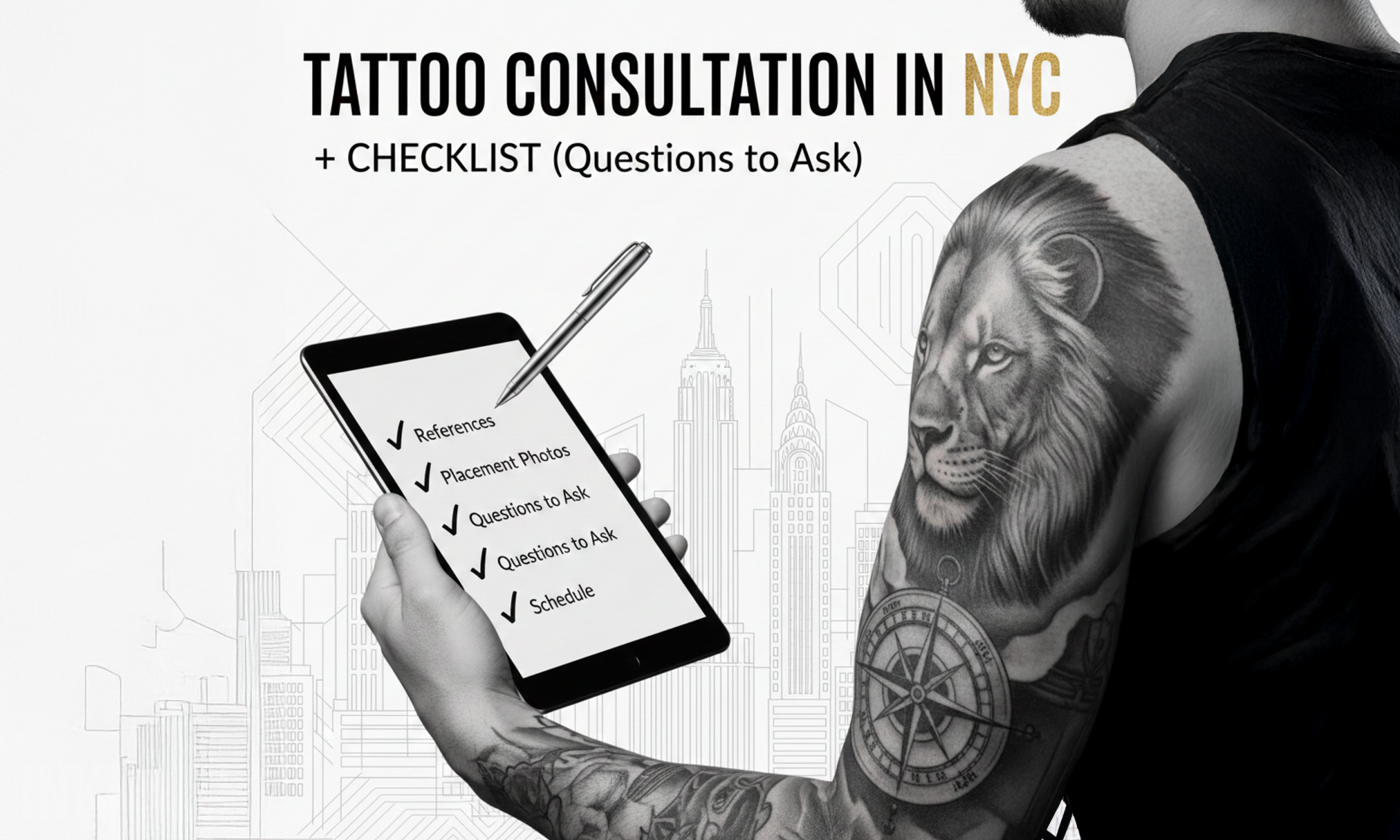
Tattoo consultation in NYC checklist graphic with a person showing a lion tattoo and a tablet checklist.

Tattoo Consultation in NYC: What to Expect + Checklist (Questions to Ask)

Planning a tattoo should feel exciting—not stressful. A tattoo consultation is where your idea becomes a clear plan: design direction, placement, sizing, and what happens next.

Quick summary (save this):

  • A consultation turns an idea into a realistic design plan and placement.

  • Bring references (what you do like and what you don’t), plus placement photos.

  • Ask the right questions to match style, detail level, and long-term wear.

  • Avoid common mistakes that lead to last-minute changes or mismatched expectations.

  • When you’re ready, you can book a consultation here: https://inknationstudio.com/book-now/


Why a tattoo consultation matters (even for small tattoos)

A consultation helps you avoid the biggest tattoo regrets:

  • Choosing a style that doesn’t match the subject (or ages poorly on that placement)

  • Picking a size that’s too small to hold detail over time

  • Underestimating how your idea translates from photo to skin

  • Not factoring in healing, aftercare, and your schedule

If you’re considering styles like realism, black & grey realism, or fine line, a consultation is especially helpful because detail, contrast, and placement all affect how the tattoo reads—today and years from now.

Explore style pages if you’re still deciding:


What happens during a tattoo consultation (timeline)

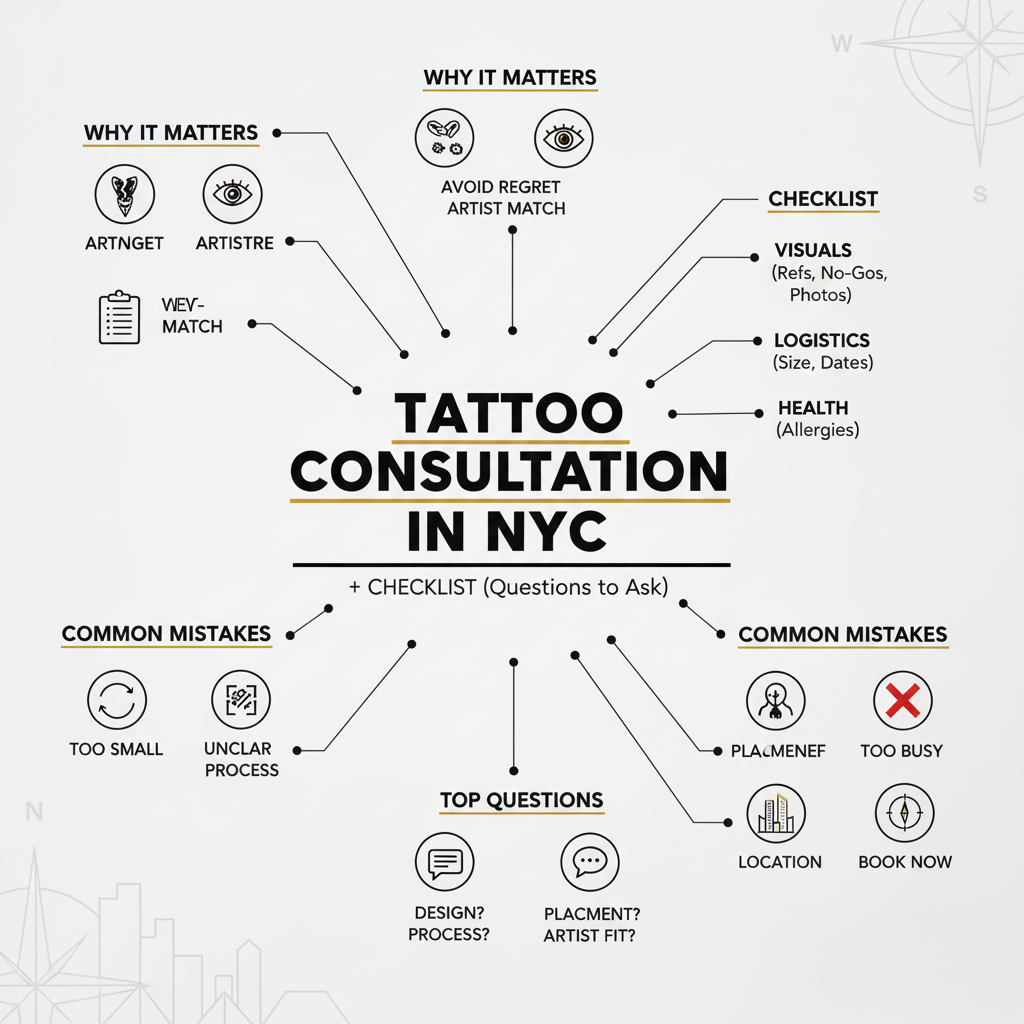
Mind map infographic for a tattoo consultation in NYC showing why it matters, a checklist, top questions, and common mistakes.
Tattoo consultation checklist: why it matters, what to bring, top questions, and common mistakes.

Every studio handles consultations a little differently, but the “good” ones tend to follow a similar flow.

1) You share your idea (and the “why” behind it)

You’ll talk through:

  • Subject matter (portrait, animal, symbol, floral, etc.)

  • Mood (dramatic, soft, high contrast, minimal)

  • Must-haves vs. nice-to-haves

2) You review references together (and set a clear direction)

Your artist will look for:

  • What you’re drawn to (line weight, shading, composition, realism level)

  • What to avoid (too dark, too busy, too bold, too minimal)

  • How to simplify or refine the idea so it reads well on skin

3) Placement + sizing (where the design actually “works”)

This is where a great consultation saves you time:

  • Does the design need room for detail?

  • Will it wrap or flow with your anatomy?

  • Will it still look clean as it heals and ages?

4) Scheduling next steps

If the concept is a fit, you’ll typically move toward:

  • Confirming the artist match (or exploring other artists)

  • Planning next steps for the design process

  • Setting up your appointment plan

Not sure who fits your style best? Start here:
https://inknationstudio.com/artists/


What to bring to your consultation (NYC-ready checklist)

Bring these and you’ll get a faster, clearer consult.

Design references

  • 3–8 images of tattoos you like (style + finish)

  • 1–3 “do not want” examples (equally important)

  • If it’s realism/portrait: the best-quality source images you have

Placement help

  • A clear photo of the body area in good lighting (no filters)

  • Notes on approximate size (in inches or “credit-card sized,” etc.)

Context

  • Any meaning, names/dates, or must-include elements

  • Your schedule constraints (travel, events, work)

Health-related notes (important)

  • Allergies/sensitivities, skin concerns, or anything that affects healing

  • If you’re unsure whether something matters, mention it—your artist can advise general next steps.


Questions to ask your tattoo artist (the ones that prevent regret)

Bring these up during your consult:

About the design

  • “What size does this need to be so the details hold over time?”

  • “What would you simplify to make this read better on skin?”

  • “Can we adjust contrast/line weight so it ages cleanly?”

About placement

  • “Will this placement distort with movement or muscle?”

  • “How will this look from a few feet away (not just close-up)?”

About process

  • “What should I do the week of my appointment to prep?”

  • “What should I expect during healing for this style and placement?”

About artist fit

  • “Do you think this concept fits your approach best, or should I speak to another artist on your team?”


How to choose the right artist/style for your idea

If you’re on the fence, use this simple match:

Then check portfolios:
https://inknationstudio.com/artists/


Common mistakes to avoid (before you book)

These are the patterns that lead to rushed decisions:

  1. Bringing one tiny screenshot and hoping the artist “figures it out.”
    Better: bring a small set of references and one clear direction.

  2. Choosing a size that’s too small for the detail you want.
    If it needs detail, it needs space.

  3. Overloading the design with too many elements.
    Strong tattoos often come from restraint and a clear focal point.

  4. Not mentioning sensitivities or healing concerns.
    You don’t need to overshare—just flag anything relevant.

  5. Treating the consultation like the finish line.
    Think of it as the plan: direction, fit, and next steps.


After the consultation: next steps

Once your direction is clear:

  • You’ll know the best placement and sizing

  • You’ll have a style plan that matches your reference

  • You can move forward with confidence and a realistic timeline

When you’re ready, book here:
https://inknationstudio.com/book-now/

And if you want to prepare for healing ahead of time:
https://inknationstudio.com/everything-you-need-to-know-about-tattoo-aftercare/

Studio snapshot (Inknation Studio)

Inknation Studio
56 W 45th St, Fl 18, New York, NY 10036, United States
(917) 261-6936
Hours: 11:00 AM – 6:00 PM every day (Mon–Sun)
Book: https://inknationstudio.com/book-now/


FAQ

Do I need a consultation for a small tattoo?
Not always—but it helps if you’re unsure about placement, sizing, or style (especially fine detail).

What should I bring if I want a realism tattoo?
High-quality references matter. Bring the clearest source images you can, plus examples of the realism style you like.

Can I bring a friend to my consultation?
Many studios allow it, but it’s best to keep the conversation focused so decisions are clear.

How do I pick the right artist?
Start with portfolios and style match, then confirm fit during the consult: https://inknationstudio.com/artists/

What if I’m worried about healing?
Ask general preparation questions and review aftercare in advance: https://inknationstudio.com/everything-you-need-to-know-about-tattoo-aftercare/
If you ever suspect an infection during healing, seek medical care promptly.