Difference Between Black & Grey Realism and Color Realism (NYC Expert Guide)

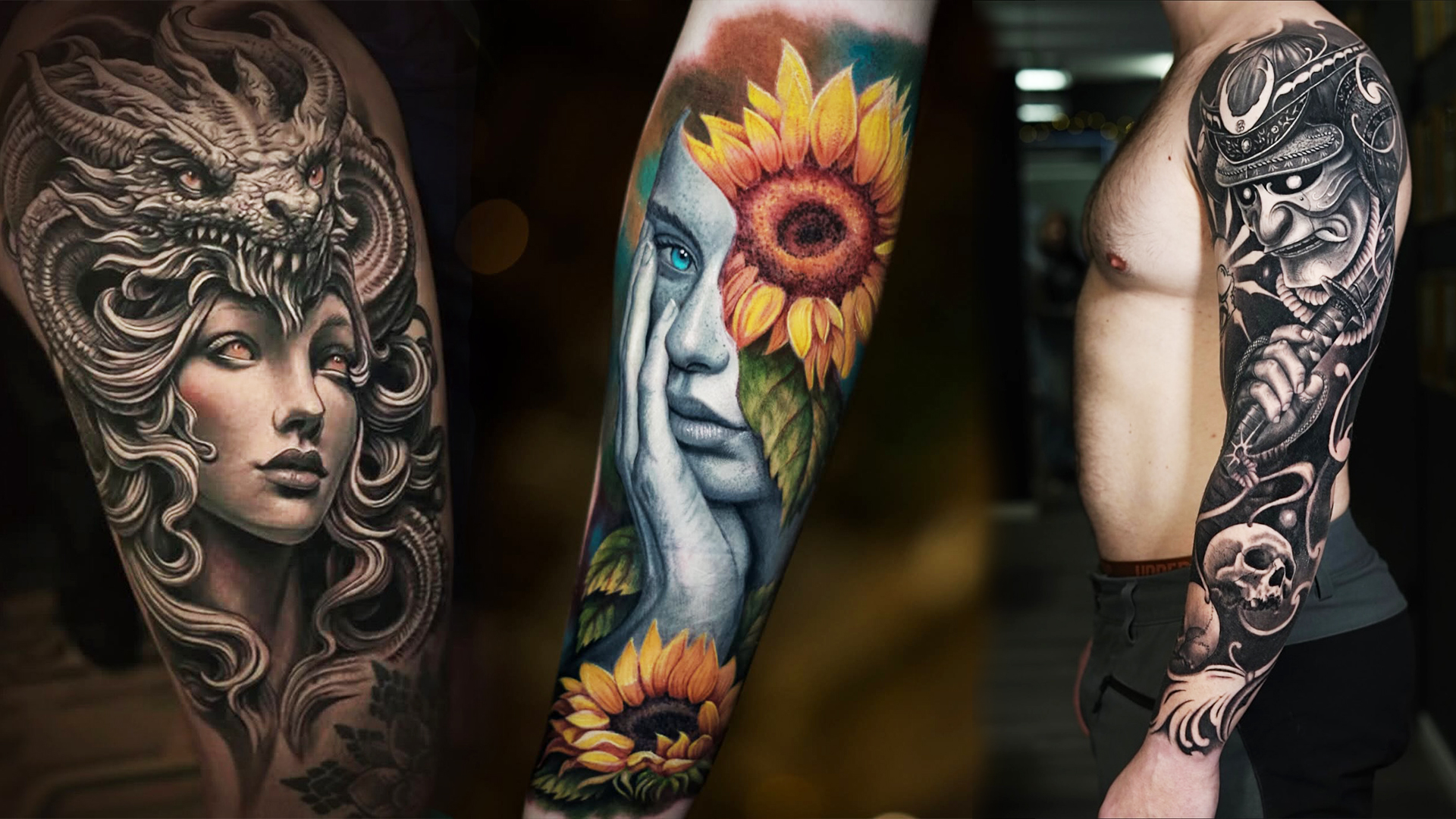
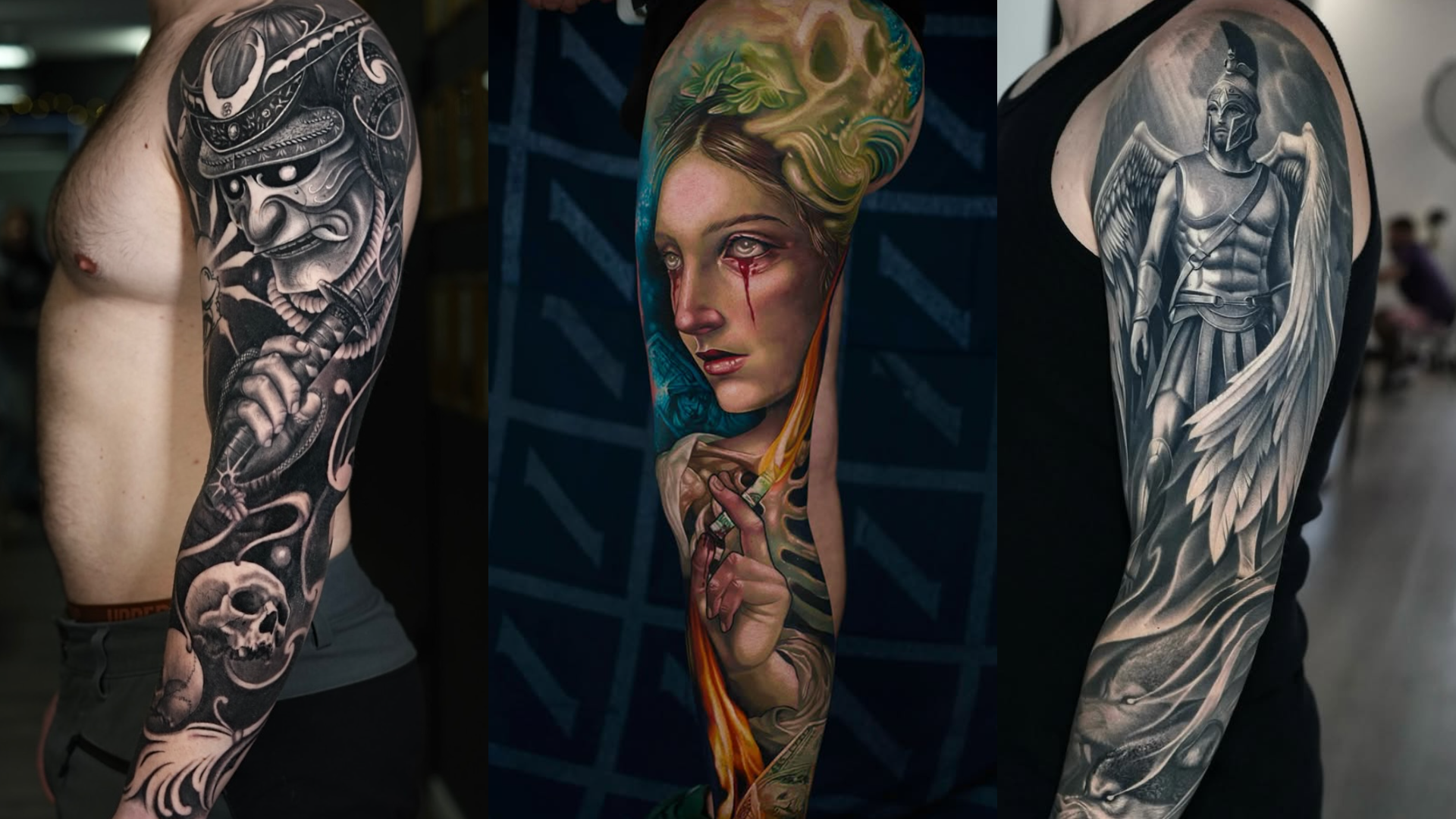
Collage of full sleeve realism tattoos in black and grey and color on arms, created at Inknation Studio NYC

Black & Grey vs Color Realism Tattoos | Inknation Studio NYC

Realism tattoos are among the most technically demanding styles in the tattoo world. Whether you’re planning a hyper-realistic portrait, a full sleeve, or a large back piece, one critical question defines the project:

Should I choose Black & Grey Realism or Color Realism?

Both styles can look powerful, but they behave differently on the skin, heal differently, and—most importantly—age differently over 10–20 years.

In this guide, the specialists at Inknation Studio NYC—a certified sterile penthouse studio in Midtown Manhattan—break down the technical differences. We combine decades of experience from award-winning artists like Darwin Enriquez and Zhimpa Moreno to help you make the right choice.
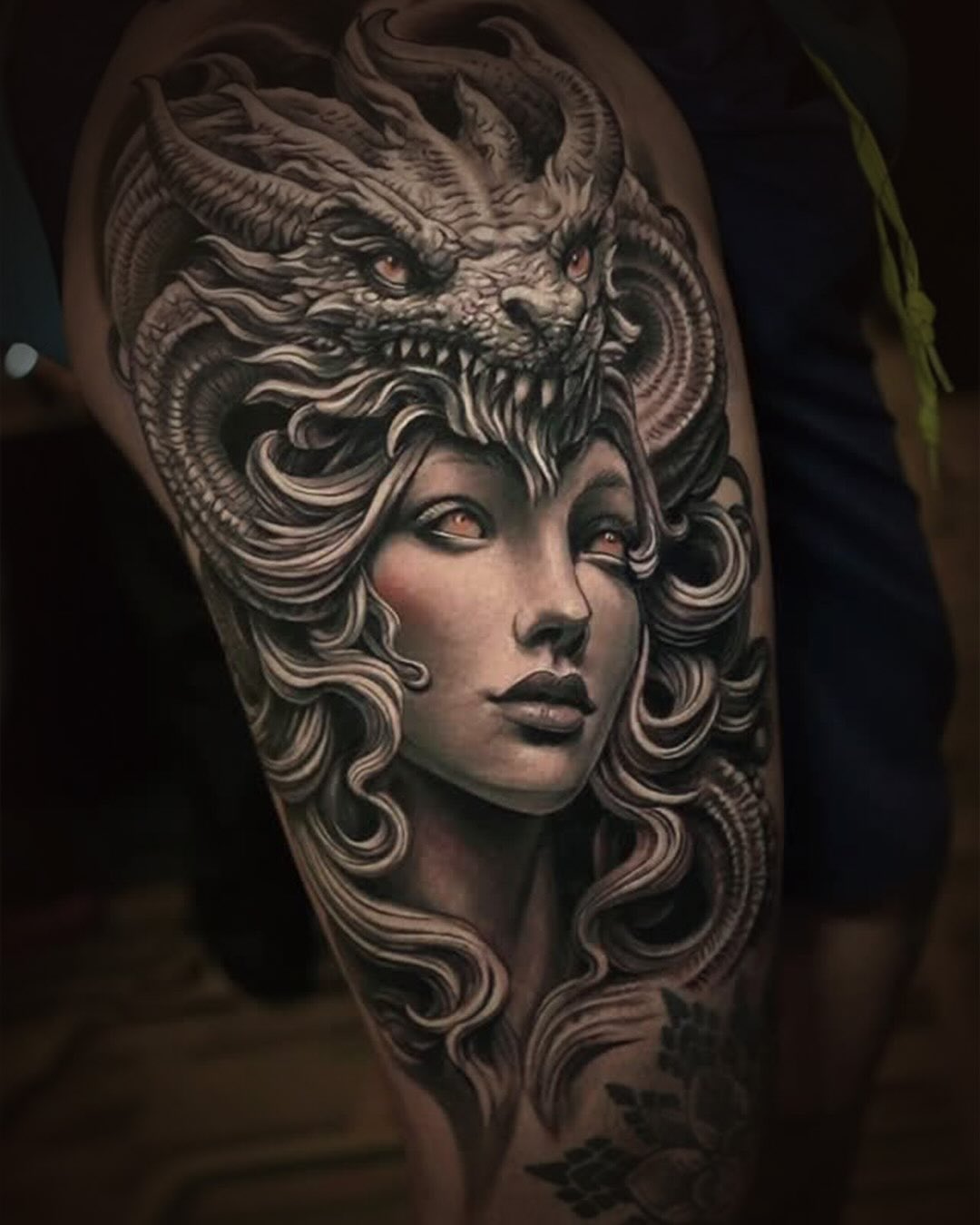
Black and grey realism tattoo of a female portrait with dragon headdress by Inknation Studio NYC
Black & Grey Realism Tattoo – Inknation Studio NYC

Quick Comparison: The Decision Matrix

For those who need a quick answer, here is how the two styles compare technically.

FeatureBlack & Grey RealismColor RealismThe Inknation Approach
AestheticClassic, cinematic, high contrastVibrant, painterly, lifelike

We use 3D pre-visualization for both styles.1

LongevityHigh; carbon-based pigment is stableMedium; requires sun protectionWe use high-contrast “underpainting” to anchor color.
Session TimeGenerally faster (focus on value)30-40% slower (focus on saturation)Optimized by our AI design process.
Pain LevelModerate (sweeping shading technique)Medium-High (packing/layering required)Reduced by our relaxed rooftop environment.
Skin Type

Excellent visibility on all skin tones 2

Requires specific pigment selectionWe customize palettes to your melanin levels.
 

What Is Black & Grey Realism?

Black & grey realism uses black ink, diluted washes and your natural skin tone to create depth, shadow and photographic detail. Instead of relying on color, it uses contrast to make the image come alive.

Key Characteristics

  • Smooth transitions of light and shadow

  • Timeless, cinematic look—elegant rather than loud

  • Perfect for portraits, statues, religious themes, animals and mythological scenes

  • Ages gracefully because there is less pigment in the skin

  • Works extremely well for full sleeves and large cohesive pieces

Why Clients Love It

Black & grey realism is dramatic without being aggressive. It looks refined in every setting—from a business meeting to a concert. Because it’s built on values (light vs dark) rather than bright pigment, it tends to stay readable and sharp on most skin tones for many years.
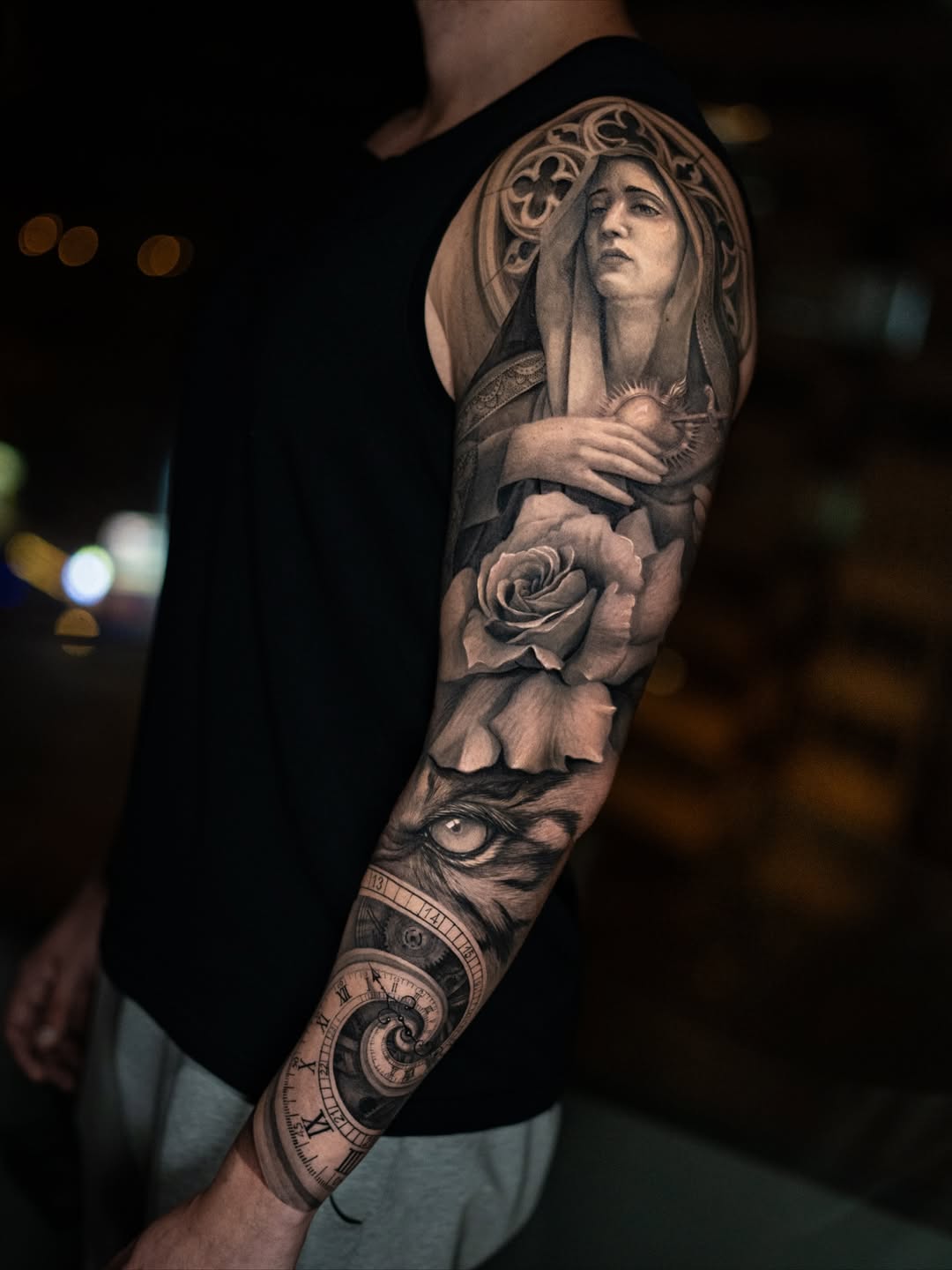
Black and grey realism full sleeve tattoo with religious portrait, rose, eye, and clock by Inknation Studio NYC
Black & Grey Realism Full Sleeve – Inknation Studio NYC

What Is Color Realism?

Color realism uses a full palette of pigments to imitate real-life tones, textures and lighting—like painting directly on the skin.

Key Characteristics

  • Rich saturation and vivid hues

  • Multiple layers required to build depth and smooth blends

  • Ideal for portraits, fantasy, surrealism, animals, flowers and high-energy concepts

  • Creates emotional intensity and instant visual impact

  • Requires careful planning for color transitions and composition

Why Clients Love It

Color realism feels alive. Eyes glow, flames burn, flowers look almost three-dimensional. For clients who love expressive, vibrant artwork—or whose concept depends on accurate color (for example, a loved one’s eyes, specific uniforms or fantasy scenes)—color realism delivers that extra level of drama.
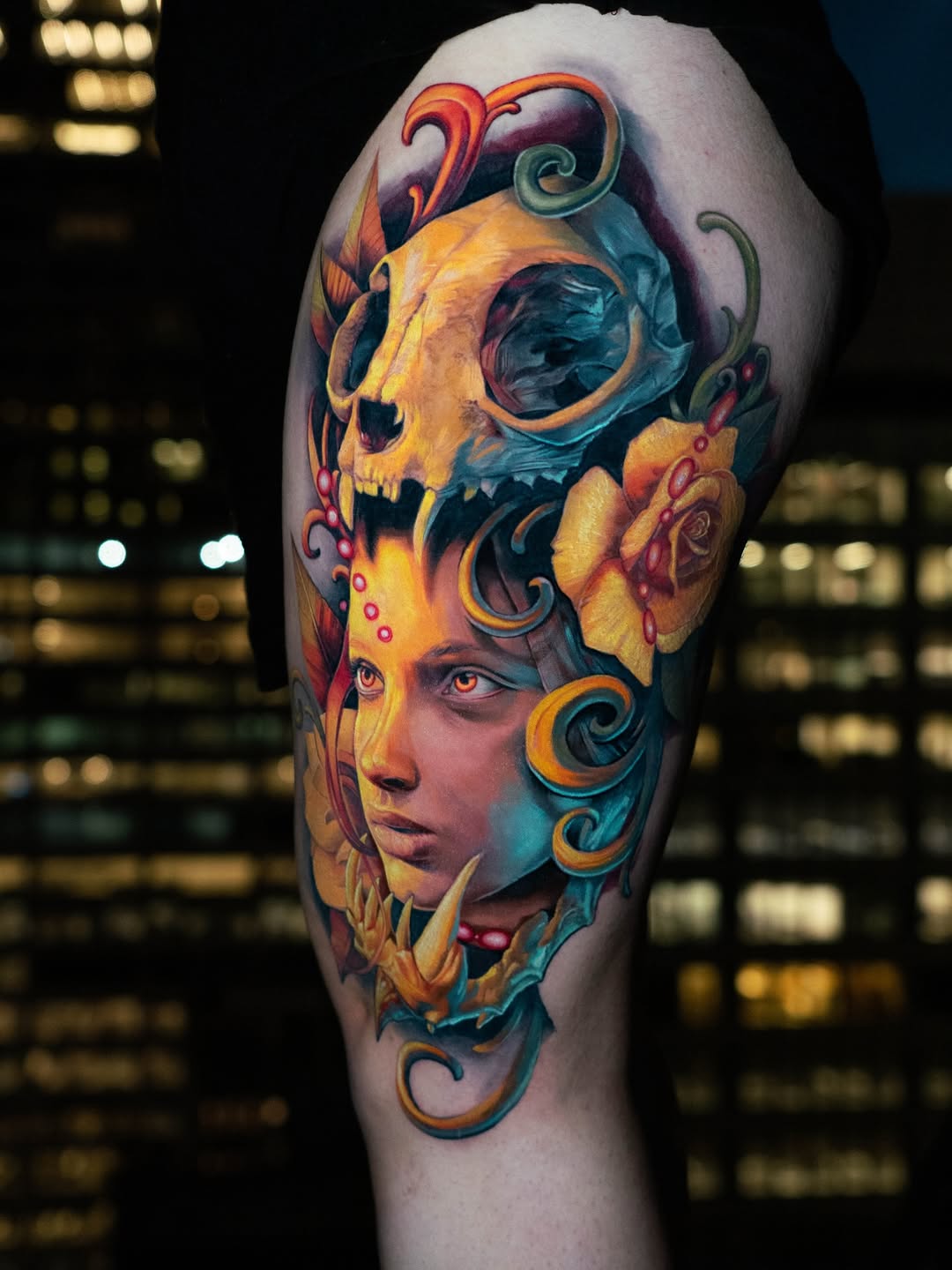
Color realism tattoo with female portrait, skull, flowers and vibrant fantasy elements by Inknation Studio NYC
Color Realism Tattoo – Inknation Studio NYC

Technical Differences: How Each Style Is Executed

1. Ink and Needle Work

Black & Grey Realism

  • Uses different dilutions of black ink to create the full range of greys

  • Often allows for faster passes because there are fewer layers

  • Smooth gradients are achieved by varying pressure, speed and dilution

Color Realism

  • Requires multiple passes and layering to build saturation and realistic tones

  • Uses more needle groupings to blend colors seamlessly

  • Demands strong understanding of color theory (temperature, contrast, complementary colors)

Because of this layering, color realism usually takes more hours and sometimes more sessions than a comparable black & grey piece.


2. Skin Trauma and Healing

Black & Grey

  • Generally lighter trauma to the skin (fewer heavy passes)

  • Many clients experience faster healing

  • Lower risk of over-working the same area

Color Realism

  • More passes can mean more trauma per session

  • Healing can feel slightly heavier or tighter in saturated areas

  • Requires strict aftercare to protect the pigment

At Inknation Studio, artists design session plans to give the skin proper rest—especially during color realism projects or dense sleeves—so the tattoo heals clean and strong.
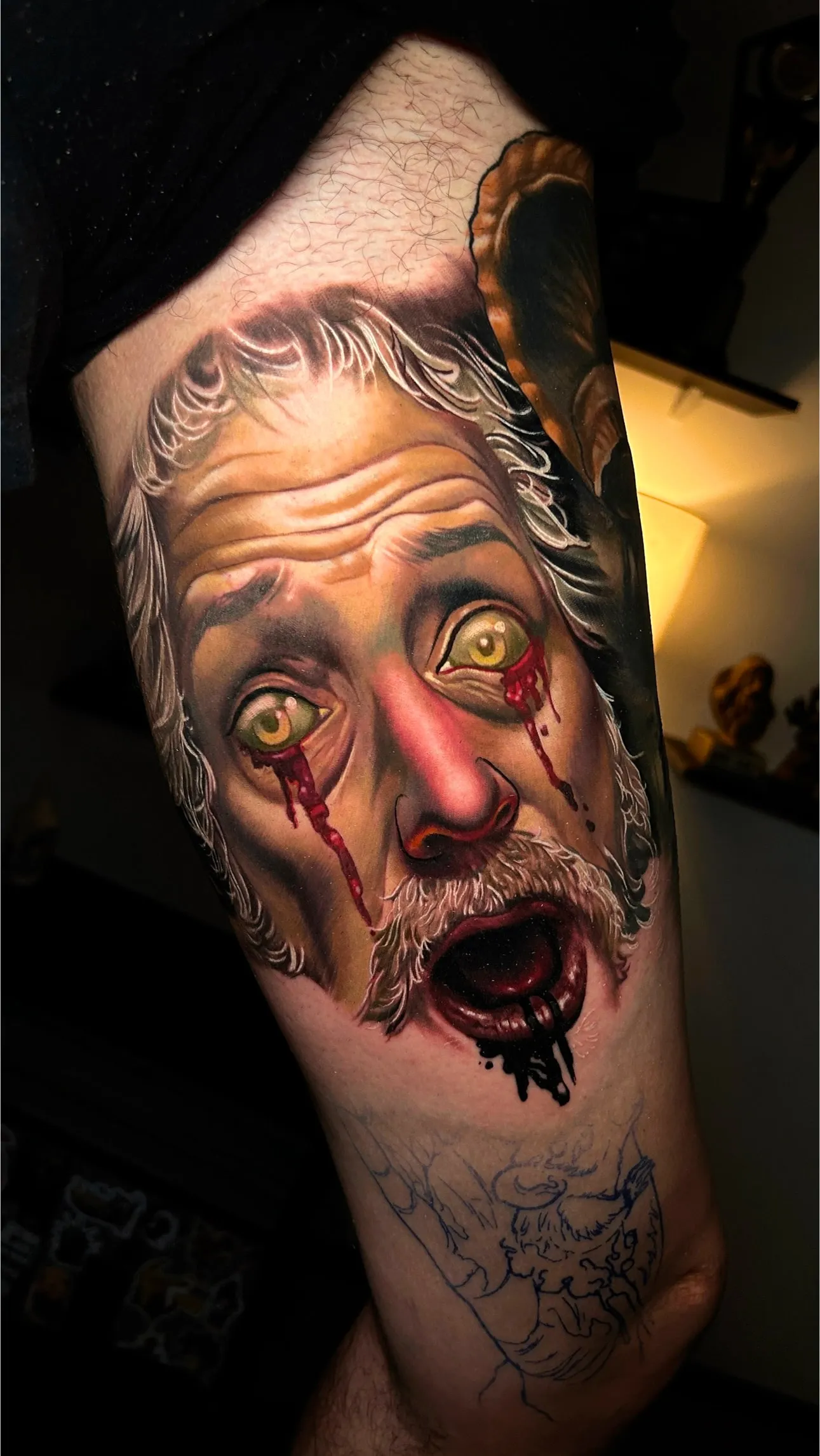
Color realism tattoo of an expressive male face with surreal bleeding eyes and dramatic shading by Inknation Studio NYC
Color Realism Tattoo – Inknation Studio NYC

3. Longevity and Aging

Every tattoo will soften over time, but the way each style ages is different.

Black & Grey Realism

  • Tends to age extremely well

  • Fades into softer greys but remains readable for decades when properly cared for

  • Works on virtually all skin tones

Color Realism

  • More sensitive to sun exposure

  • Certain pigments (reds, yellows, blues) can fade faster without SPF and proper care

  • May require periodic touch-ups to keep colors vibrant

When executed by experienced realism artists, both styles hold up for many years, but black & grey usually keeps its clarity the longest with the least maintenance.

Tattoo artist in New York City creating a black and grey realism tattoo with red roses and Statue of Liberty elements at Inknation Studio NYC
Realism Tattoo in NYC – Inknation Studio

4. Style Personality and Emotional Impact

Beyond the technical side, each style has its own “personality.”

Black & Grey Realism – Cinematic, Timeless, Dramatic

Often chosen for:

  • Memorial and family portraits

  • Classical and religious imagery

  • Mythology and statue-inspired designs

  • Hyper-realistic portraits with strong contrast

Color Realism – Expressive, Vivid, Impactful

Often chosen for:

  • Fantasy and surrealism

  • Animals and wildlife

  • Flowers and nature themes

  • Emotionally intense portraits and conceptual pieces

The decision is not only artistic—it’s emotional. Ask yourself how you want people to feel when they see your tattoo.
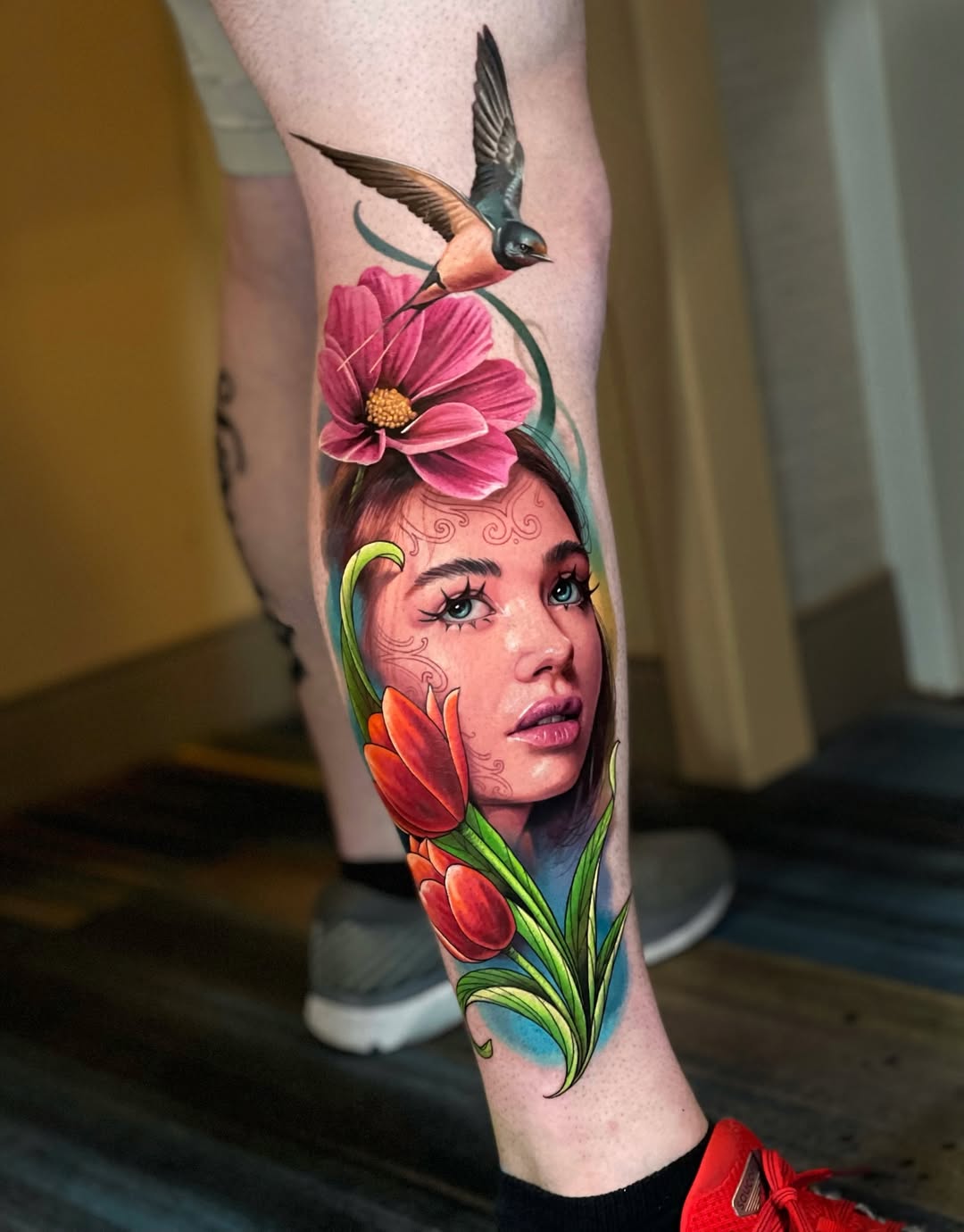
Color realism leg tattoo featuring a female portrait, flowers and bird created at a New York City tattoo studio specializing in high-end realism

Which Realism Style Should You Choose?

There is no universal “better” style; there is only what better fits you.

Choose Black & Grey Realism If…

  • You want a timeless, elegant look

  • Your idea involves statues, portraits, mythology or dramatic shadows

  • You prefer a tattoo that ages smoothly with minimal touch-ups

  • You want a sleeve that looks cohesive and classy in any context

Choose Color Realism If…

  • You love expressive, vibrant artwork

  • Your concept relies heavily on accurate color (eyes, skin tones, nature, fantasy)

  • You want a piece that pops from across the room

  • You’re comfortable with long-term care: sunscreen, hydration and occasional refresh sessions

If you’re still unsure, a consultation with a realism specialist can help translate your idea into the style that will serve it best.


How Inknation Studio NYC Approaches Each Style

Inknation Studio is located in a penthouse rooftop space in Midtown Manhattan, making it a destination studio for clients from all over New York City, the United States and abroad. The team brings together international artists known for black & grey realism, color realism, full sleeves and large custom projects.

When you come to Inknation Studio—whether in person or through an online consultation—the process typically includes:

  1. In-Depth Consultation
    Understanding your story, symbolism and emotional goals. Are you honoring someone, marking a life change, or simply expressing your style?

  2. Concept and Composition Design
    For sleeves and large pieces, artists create digital mockups and references, planning how the tattoo will flow around the body—whether in black & grey, color or a hybrid of both.

  3. Artist Matching
    You’re paired with the realism specialist whose strengths best fit your idea—portrait expert, color specialist, mythological storyteller, etc.

  4. Session and Healing Plan
    The studio builds a session schedule based on detail density, whether the piece is black & grey or color, and how much time your skin needs between passes.

  5. Execution with Long-Term Aging in Mind
    Artists think not just about how the tattoo looks fresh, but how it will read from a distance and how it will age over 5–10–15 years, depending on the style you choose.

This approach—combined with a portfolio packed with high-level black & grey and color realism—has positioned Inknation Studio as one of the top realism tattoo studios in New York City and a reference point for realism work in the United States.
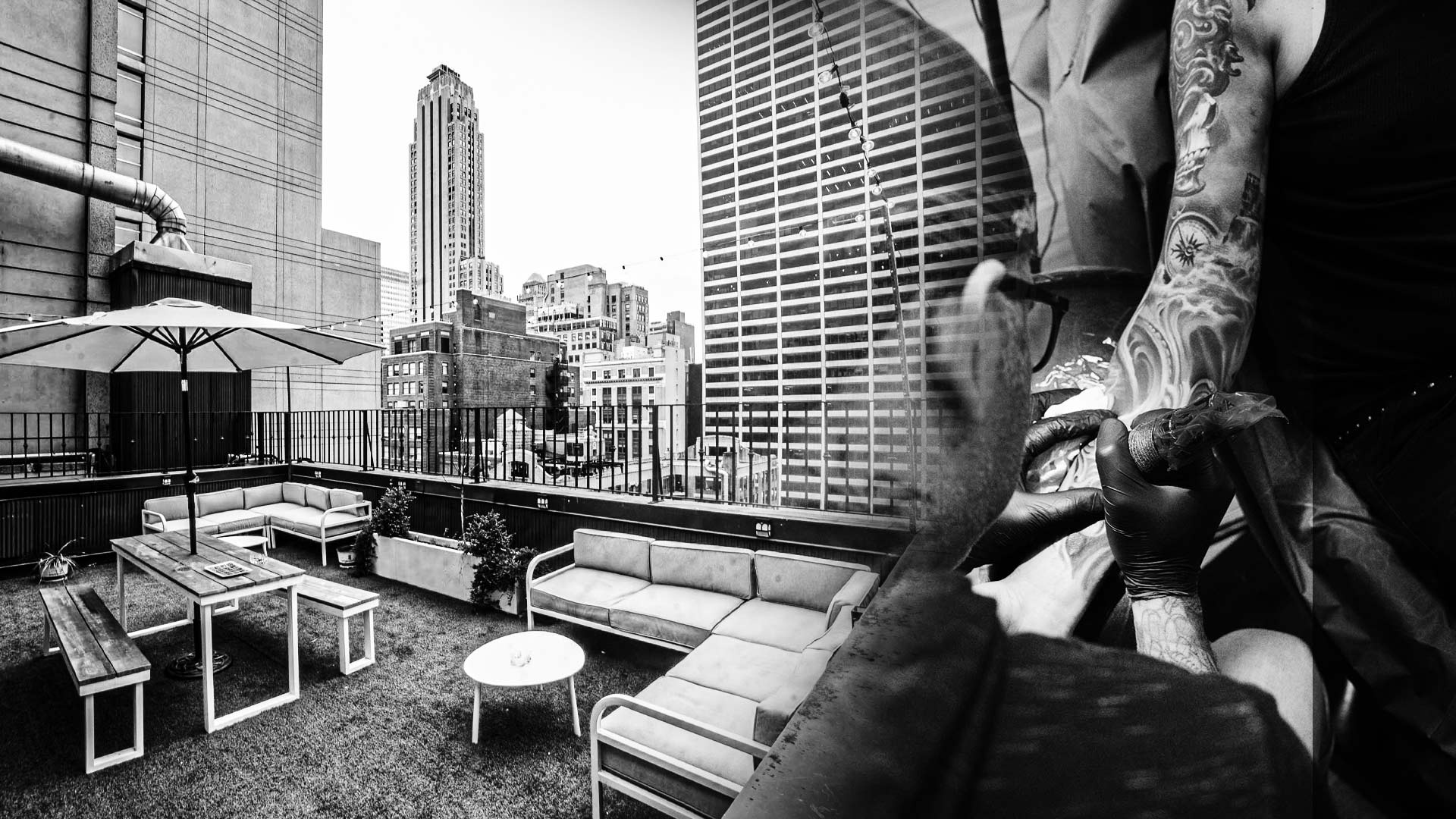
Rooftop tattoo studio in Midtown Manhattan with a tattoo artist working on a realism sleeve, representing Inknation Studio in New York City
Black and white photo showing the rooftop of a tattoo studio in Midtown Manhattan combined with a tattoo artist working on a realism sleeve. This image represents the signature environment of Inknation Studio in New York City, known for high-end realism tattoo work and its unique rooftop location.

FAQ: Black & Grey vs Color Realism

Does color realism last as long as black & grey?
Black & grey generally ages more gracefully, but color realism can last very well when done by an expert and cared for with SPF, moisturising and occasional touch-ups.

Which style is more expensive?
Color realism typically costs more because it requires more hours, more passes and sometimes more sessions.

Is black & grey less painful?
Pain depends more on placement and your sensitivity than on style, but color realism can feel “heavier” due to repeated layering in the same area.

Which style heals faster?
Black & grey often heals faster because the skin experiences less intense trauma per session.

Can I combine both styles in one sleeve?
Yes. Hybrid sleeves—where main elements are in black & grey and certain focal points are in color—can look stunning when planned by an experienced realism artist.

How do I know which style fits my idea best?
Bring your references and story to a consultation. A seasoned realism artist can show you mockups in both styles and explain how each would age on your specific skin tone.
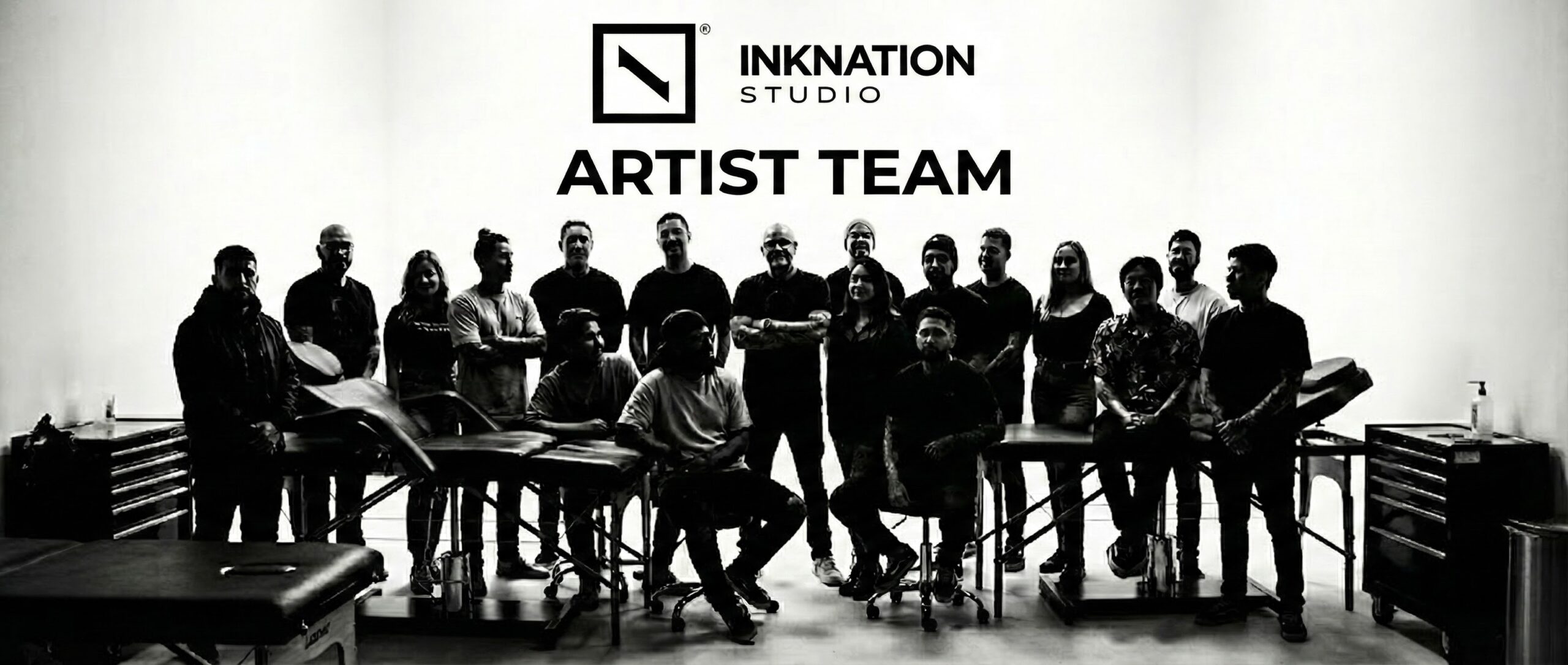
Inknation Studio artist team group photo in New York City, showcasing expert realism tattoo artists at one of the leading tattoo studios in the United States
Inknation Studio – Artist Team, New York City


Conclusion: Choose the Style That Matches Your Vision

Both black & grey realism and color realism are powerful artistic options. The right choice depends on your message, your personality, and how you want your tattoo to evolve over time.

At Inknation Studio NYC, you can explore both styles with artists who specialize at the highest international level.

Full Sleeve Realism Tattoo: How Long It Really Takes in NYC

Full sleeve black and grey realism tattoo at Inknation Studio NYC

How Long Does a Full Sleeve Realism Tattoo Take?

f you’re dreaming about a full sleeve realism tattoo, you already know it’s not a “walk-in and walk-out” kind of project. A sleeve is a serious commitment of time, energy and budget—but when it’s done right, it becomes one of the most powerful pieces of art you can wear.

So, how long does a full sleeve realism tattoo really take?

In this guide, we’ll break down:

  • The factors that decide how many hours and sessions you’ll need

  • A realistic timeline in months for a full sleeve

  • The difference in time between black & grey realism and color realism

  • How much healing time you should plan between sessions

  • How the artists at Inknation Studio in New York City plan and execute large sleeve projects in a penthouse rooftop studio in Midtown Manhattan

Full sleeve black and grey realism tattoo on male arm at Inknation Studio NYC
Example of a full sleeve black and grey realism tattoo created at Inknation Studio NYC.

What Exactly Is a Full Sleeve Realism Tattoo?

full sleeve covers your arm from shoulder to wrist, usually wrapping around the entire circumference of the arm with a unified design.

When you combine that with realism whether black & grey or full color—you’re talking about:

  • Complex details (faces, textures, fur, fabric, light and shadow)

  • Smooth gradients and transitions

  • Large compositions that often include portraits, animals, mythology, architecture or symbolic elements, all integrated into one story

At Inknation Studio, sleeves often fall into categories like:

  • Realistic family portraits

  • Pet portraits

  • Greek mythology scenes

  • Full symbolic compositions with religious or personal themes 

All of that detail takes time. Which brings us to the main question.

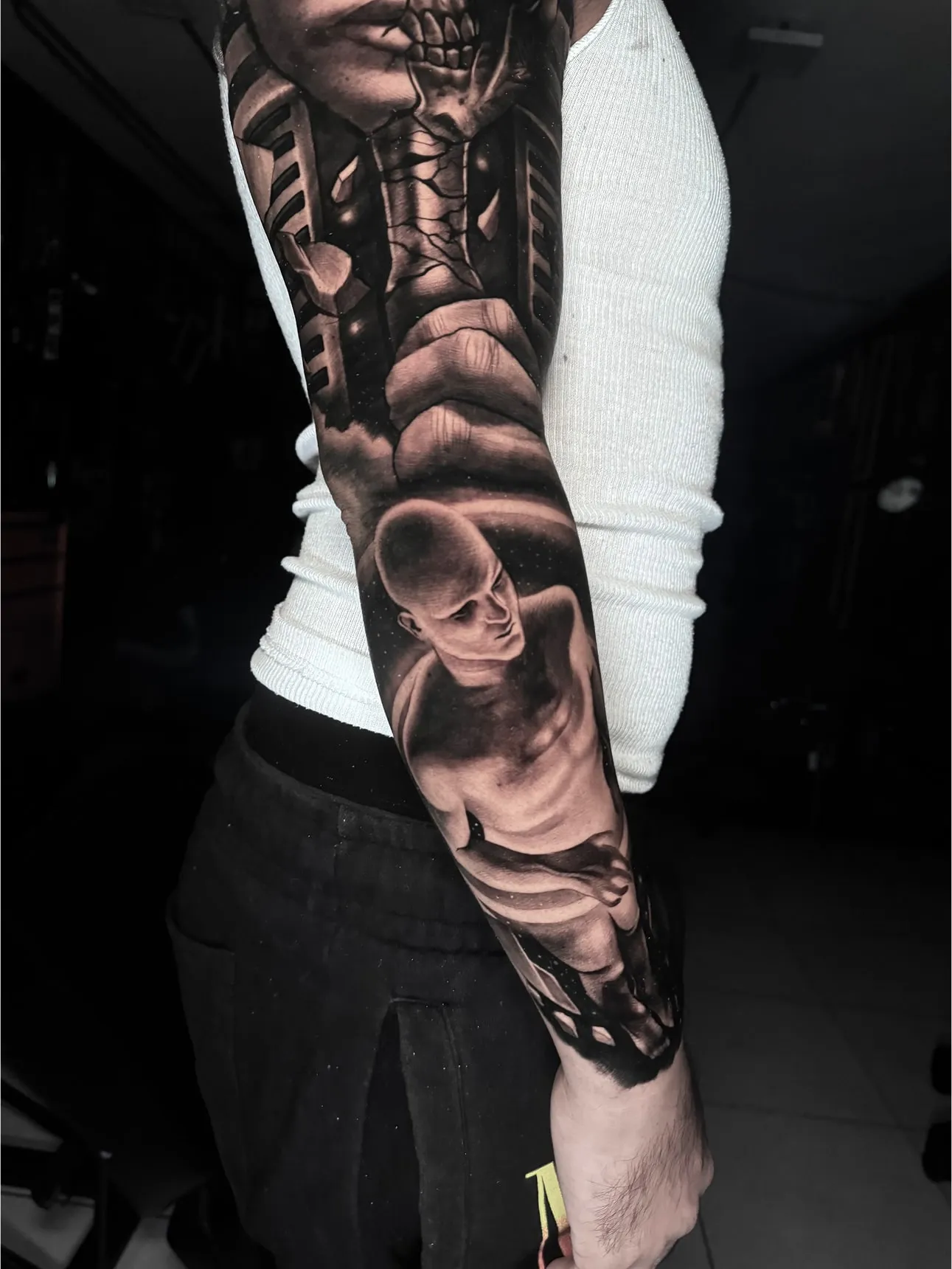
Full sleeve black and grey realism tattoo with biomechanical design and human figure at Inknation Studio NYC
Full sleeve black and grey realism tattoo with a biomechanical structure and human figure, created at Inknation Studio NYC.

The Big Factors That Decide How Long Your Sleeve Takes

No two sleeves are the same, so any time estimate has to consider a few key variables.

1. Complexity of the Design

  • Simple / open designs (more skin showing, larger shapes, less micro-detail) are on the faster end.

  • Dense realism with multiple portraits, textures (fur, armor, stone, clouds), and smooth transitions takes dramatically longer.

Industry ranges for full sleeves often go from 20 to 40+ hours of tattooing time, and some extremely complex projects can reach 60–80 hours

Realism tends to be on the upper half of that spectrum, because of the detail required.

2. Size of Your Arm

A full sleeve on a very muscular or large arm simply has more surface area than on a smaller build. Multiple studios note that arm size is one of the variables that pushes a sleeve from ~20 hours closer to 30+ hours.

3. Black & Grey vs Color Realism

Color realism usually:

  • Requires more layering and packing of pigment

  • Demands more passes to get smooth blends

  • Can mean longer healing in some zones

That’s why many artists report that color sleeves can take more hours and/or more sessions than black & grey sleeves.

4. Your Pain Tolerance and Stamina

Some clients can sit 6–7 hours relatively comfortably; others tap out around 3–4 hours. Most studios estimate session lengths between 3 and 6 hours for large projects.

The more time you can safely spend in the chair per visit, the fewer sessions you’ll need overall.

5. Healing and Schedule

Even if you could sit every day, your skin can’t.

Many artists recommend 3–4 weeks of healing between larger sessions on the same area to allow the skin to recover fully before going back over it.

Your personal calendar—work, travel, budget—will also space out sessions. That’s why some sleeves finish in 3–4 months, while others unfold over a year or more.

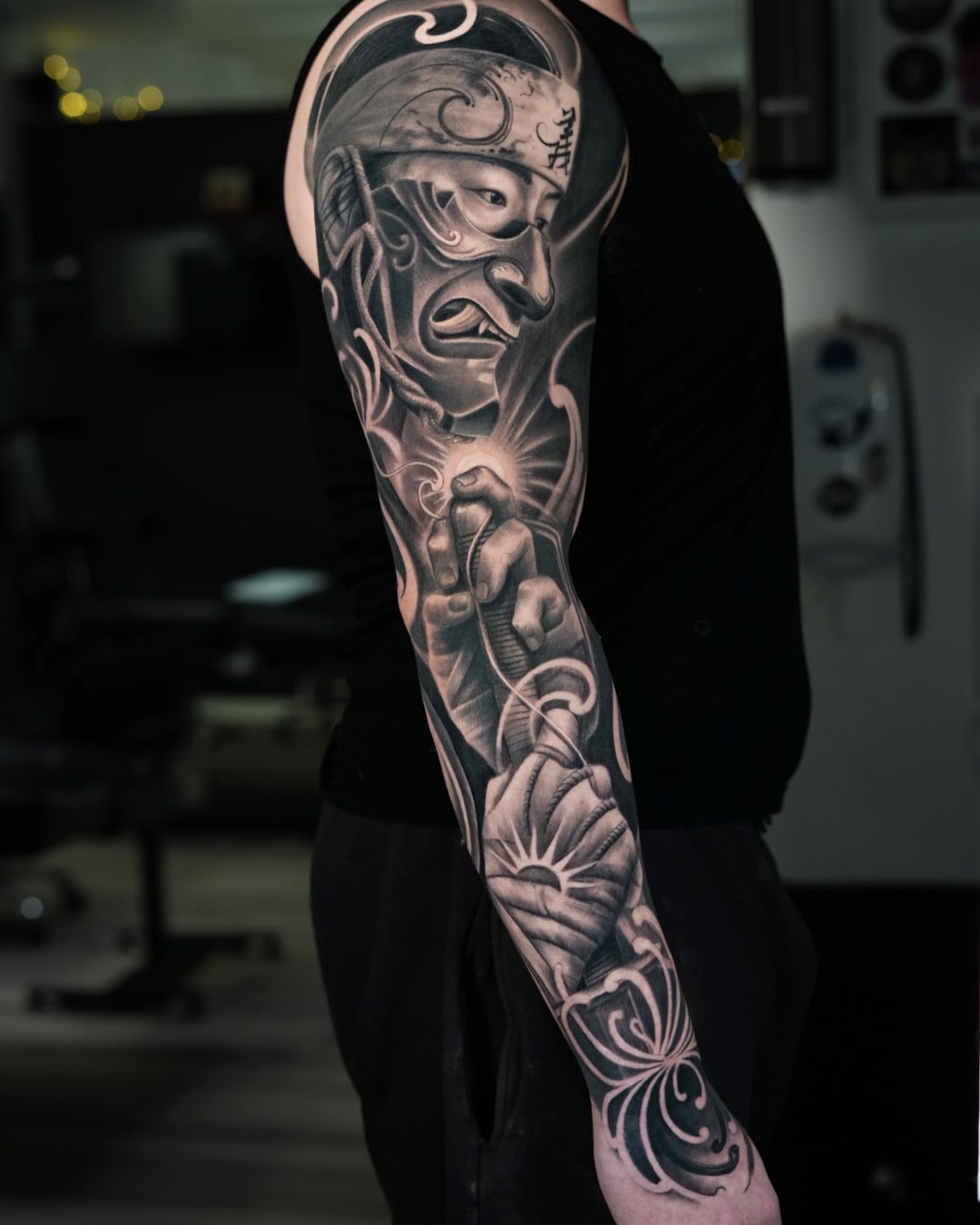
Samurai Black and Grey Realism Sleeve – Inknation Studio NYC Full sleeve black and grey realism tattoo featuring a samurai mask and ornamental details, created at Inknation Studio NYC.

Average Timeframe: Hours, Sessions and Calendar Timeline


Let’s put some realistic numbers together, especially for realism sleeves like the ones Inknation Studio is known for.

How Many Hours?

Looking at ranges from experienced studios and artists:

  • Simpler sleeves (less dense realism, more open skin):
    ≈ 20–30 hours total tattoo time. 

  • Typical realism sleeves with rich detail:
    ≈ 30–45 hours.

  • Ultra-complex sleeves (multiple portraits, background, fine textures everywhere):
    ≈ 45–60+ hours, sometimes higher.

At Inknation Studio, a “classic” full realism sleeve usually lives in that 30–45 hour band, but some projects—especially multi-portrait or mythological compositions—can extend beyond that depending on the vision.

How Many Sessions?

If each session averages 4–6 hours, then:

  • 30-hour sleeve might take 5–7 sessions.

  • 45-hour sleeve might take 7–10 sessions.

Some artists and clients choose longer marathons (full days) to reduce the number of visits, but even then, healing time still stretches the project over weeks or months. Many real client stories online show sleeves completed over 5–8+ sessions spaced about a month apart.

How Many Months?

If we plan with healthy healing breaks of 3–4 weeks between sessions:

  • 5 sessions → roughly 3–5 months

  • 8 sessions → roughly 6–9 months

  • 10+ sessions → often close to a year or more

So a realistic expectation for a full sleeve realism tattoo is:

“Around 20–40+ hours of tattoo time, spread over 5–8 sessions, usually taking several months to a year from first linework to final healed sleeve—depending on complexity, your artist’s style, and your schedule.”

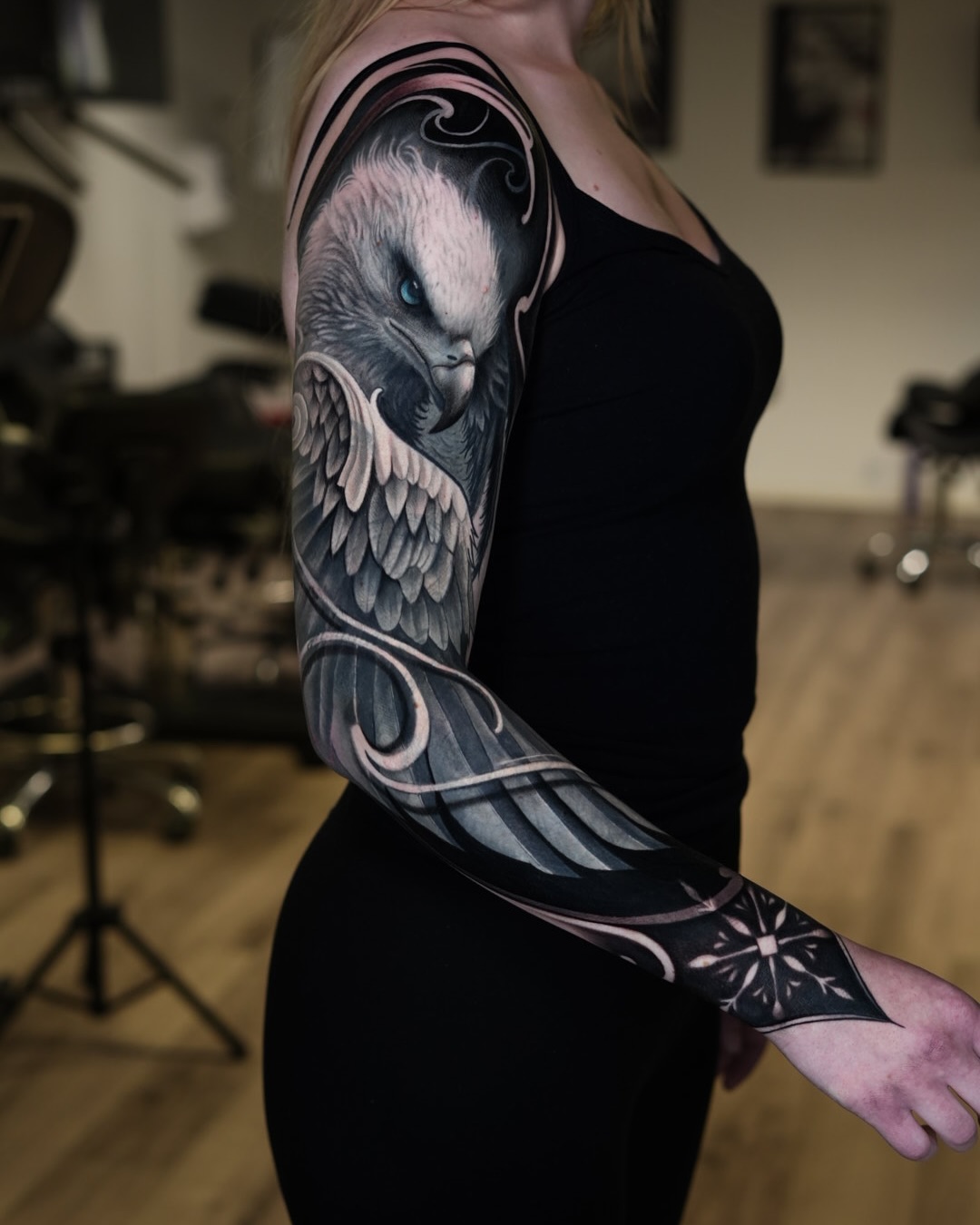
Full sleeve black and grey realism tattoo of an eagle on female arm at Inknation Studio NYC
Full sleeve black and grey realism tattoo featuring a detailed eagle on a female arm, created at Inknation Studio NYC.

Black & Grey vs Color Realism Sleeves: Does One Take Longer?

Short answer: yes, usually color takes longer.

Black & Grey Realism

  • Uses mostly black ink, grey washes and the client’s skin tone.

  • Focuses on contrast, light and shadow, and smooth shading.

  • Often heals a bit faster and can feel slightly less “heavy” on the skin.

Timewise, a black & grey realism sleeve might sit closer to the lower or middle part of our hour ranges (for example, 25–35 hours for many standard sleeves, depending on the design).

Color Realism

  • Requires multiple passes to build up saturated colors and smooth blends.

  • Often needs additional attention to transitions between hues (for example, skin tones in portraits, fire, skies, flowers).

  • Some artists recommend longer breaks between heavy color sessions on the same area to let the skin rest.

This is why many artists mention that full color sleeves often need extra hours and, sometimes, an additional session or two compared with a similar black & grey concept. 

At Inknation, both black & grey and color realism are core strengths, including portraits, pets and mythological compositions. The studio will typically map out a custom time estimate after reviewing your references and arm in person or on video call.

Healing Time Between Sessions (and Why You Shouldn’t Rush It)

A full sleeve isn’t just about hours in the chair. It’s also about the weeks in between.

Typical Healing Window

Many reputable studios recommend:

  • 3–4 weeks between large sessions on the same area of the arm

  • Potentially longer breaks if the last session was especially intense or if you had any healing issues.

    During that window, your skin:

    • Rebuilds its protective barrier

    • Settles pigment more permanently

    • Sheds the outer healed layer

    Why Rushing Is a Problem

    Trying to compress all your sleeve work into back-to-back days or extremely short intervals can:

    • Increase the risk of over-working the skin

    • Lead to longer-term texture changes or scarring

    • Potentially compromise color saturation and smoothness

    There are exceptions—some artists and clients successfully complete sleeves in intensive blocks of consecutive days, often totalling 50–60 hours in under a week—but this requires careful planning, strong health, and an experienced realism artist who knows exactly how much the skin can handle.

At Inknation Studio, the default approach for most clients is a steady, sustainable timeline: enough time between sessions to heal properly, without losing momentum on the project.

How Inknation Studio NYC Plans Full Sleeve Realism Projects

Inknation Studio sits in a penthouse space in Midtown Manhattan, with a rooftop terrace and a team of international realism specialists.

When someone comes in—or reaches out online—asking for a full sleeve, the process usually follows these steps:

1. Consultation: Story, Style and Budget

You’ll talk with the team about:

  • The story behind your sleeve (family, mythology, spirituality, personal milestones, etc.)

  • Whether you prefer black & grey realismcolor realism or a hybrid

  • Placement (inner arm, outer arm focus, elbow, hand, etc.)

  • Your budget and how flexible your schedule is

From there, Inknation matches you with the ideal artist—whether that’s a portrait specialist, a mythological realism expert, or someone known for large, flowing compositions.

2. Designing the Sleeve as One Cohesive Piece

Instead of piecing together random tattoos over time, the artists at Inknation:

  • Build the entire sleeve concept first—often using reference photos, sketches and digital mock-ups

  • Decide where key focal points (like portraits or central symbols) will live

  • Plan backgrounds, transitions and negative space so the sleeve moves naturally around your arm

This “whole-arm” planning keeps the number of hours efficient and helps avoid re-working areas later.

3. Mapping Out Sessions and Timeline

Based on your design and pain tolerance, the studio will:

  • Estimate total hours (for example, 30–40 hours for a detailed realism sleeve)

  • Break that into session blocks (for instance, 6 sessions of 5–6 hours each)

  • Schedule them with healthy healing gaps (3–4 weeks apart in most cases)

Clients flying into New York City from other states or countries can sometimes opt for more intensive back-to-back sessions, with the artist carefully balancing workload and healing.

4. First Session: Layout and Foundation

Many sleeves start with:

  • Stenciling and placing main elements

  • Laying down important outlines, shapes and large shadows

  • Sometimes completing one focal element (for example, a portrait) so you leave with a visible, satisfying start

This makes the next sessions more focused and predictable.

5. Building Depth Over Multiple Sessions

Subsequent sessions gradually:

  • Add details, textures and secondary elements

  • Build backgrounds and transitions around the arm

  • Refine contrast so the sleeve reads well from distance and up close

Realism artists at Inknation are known for portraits, animal realism, and symbolic pieces like Greek mythology scenes, which require careful layering and patience.

6. Final “Polish” Session

Once the main work is healed, a final session may:

  • Fix any tiny light spots or inconsistencies

  • Reinforce contrast in key areas

  • Add small details that make the sleeve look finished from every angle

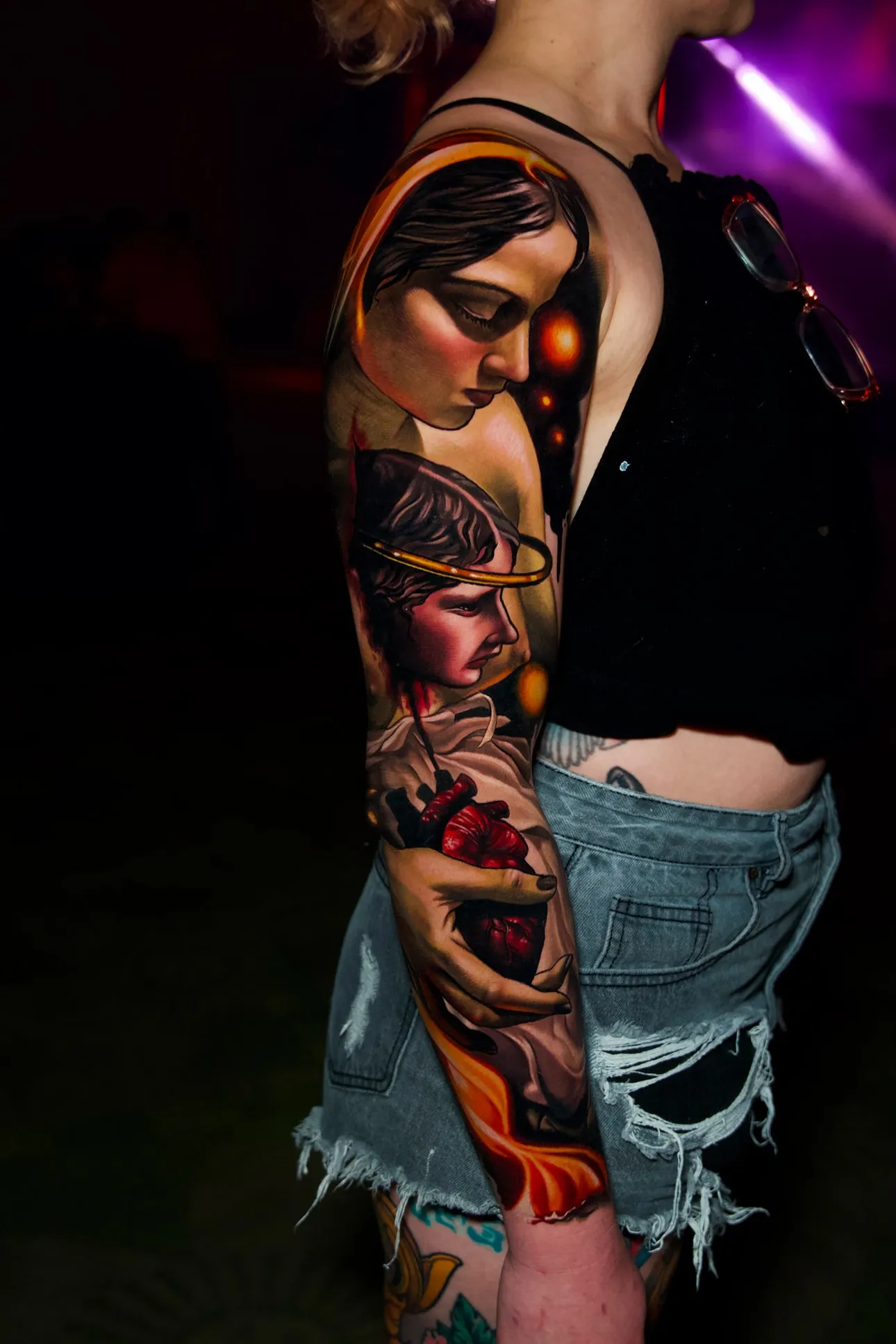
Full sleeve color realism tattoo with religious portraits on female arm at Inknation Studio NYC
Full sleeve color realism tattoo with layered religious portraits and rich warm tones, created at Inknation Studio NYC.

Are You Ready to Commit to a Full Sleeve?

Before you dive in, it helps to ask yourself:

  • Can I handle several multi-hour sessions?

  • Am I okay with this process taking months, not days?

  • Do I trust my artist enough to commit to their vision and direction?

  • Does my schedule (and budget) realistically allow for 5–8+ sessions over the coming year?

If the answer is yes, then a full sleeve realism tattoo can become one of the most meaningful, personal and visually striking projects of your life.

FAQ: Common Questions About Full Sleeve Realism Tattoos

How many hours does a full sleeve realism tattoo usually take?

For most realism sleeves, a realistic range is 20–40+ hours of tattoo time, with many detailed pieces landing in the 30–45 hour zone. Extremely complex sleeves can go higher.

How many sessions will I need?

Assuming 4–6 hour sessions, expect 5–8 sessions for many full sleeves, with some projects needing 10 or more visits depending on detail and your pain tolerance.

How long between sessions?

Most artists recommend at least 3–4 weeks between larger sessions on the same arm to allow for proper healing and to protect your skin.

Can I finish a sleeve in one week?

Technically, some artists and clients compress a sleeve into intensive blocks (for example, 6–7 long days in a row totalling 40–60 hours). However, this is demanding on your body and skin and should only be done under the guidance of an experienced artist who understands how to avoid over-working the area.

Do color realism sleeves take longer than black & grey?

Often, yes. Color realism tends to require more layers and passes, which can add hours and occasionally an extra session or two compared with a similar black & grey design.

How do I start a sleeve at Inknation Studio?

You can start by sending your idea and reference photos through the Inknation Studio website inquiry or consultation form. From there, the team will recommend the best artist for your vision and help you estimate hours, sessions and cost. 

Ready to Start Your Sleeve in New York City?


A full sleeve realism tattoo isn’t just a purchase—it’s a collaboration between your story and your artist’s vision.

At Inknation Studio, located at 56 W 45th St, Floor 18, New York, NY 10036, you’ll work with world-class realism artists in a penthouse studio overlooking Midtown Manhattan.

Whether you’re planning a black & grey mythological sleeve, a full-color portrait composition, or a piece that honors your family or heritage, the team will:

  • Help you map out a realistic timeline

  • Design a cohesive concept for your entire arm

  • Guide you through each session and healing phase until your sleeve is complete