
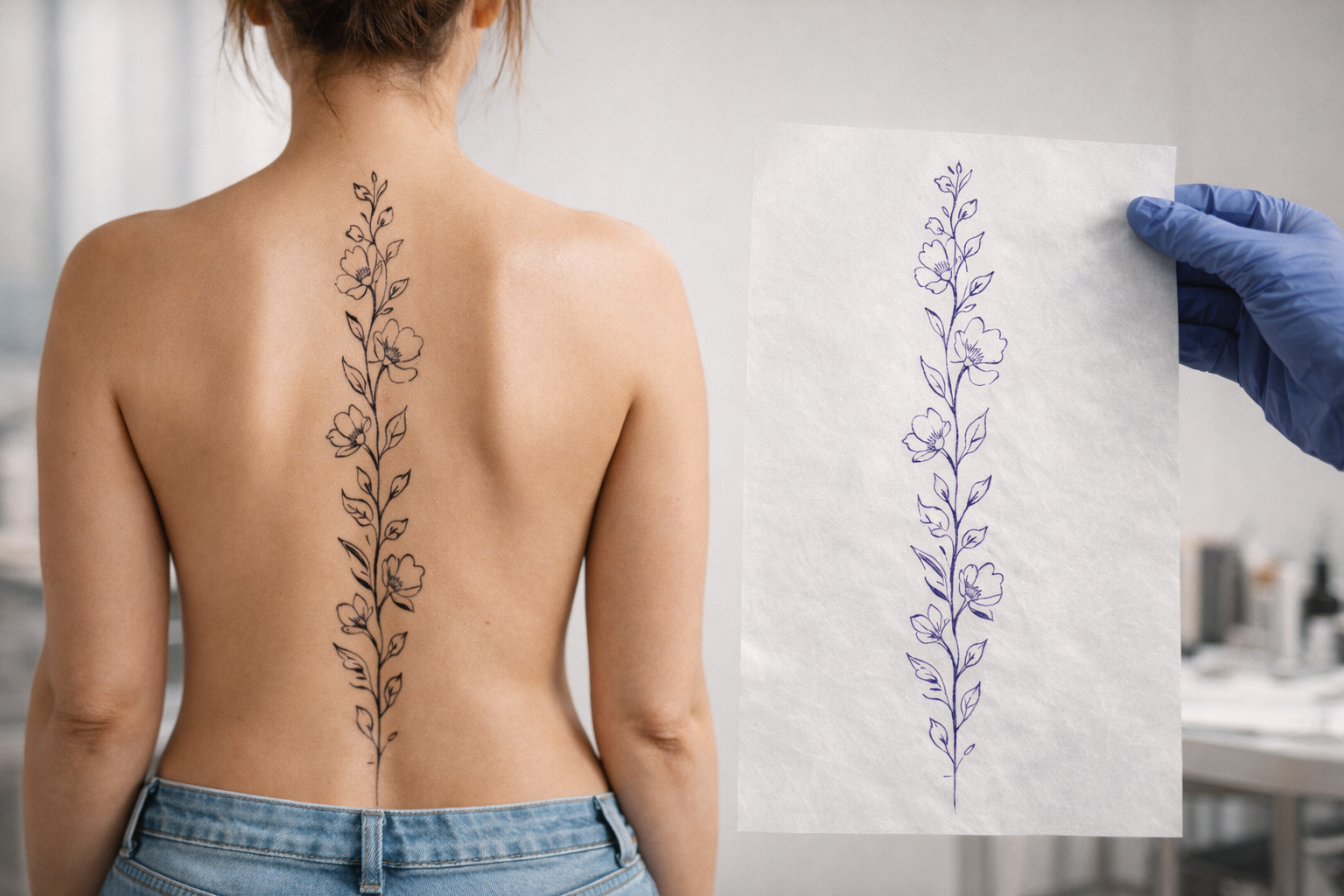

Why spine tattoos look so good (and why planning matters)
A spine tattoo isn’t just “a design on your back.” It’s a design on an axis—a placement that visually reads as centered, balanced, and intentionally composed.
That’s also why spine tattoos can go wrong fast:
-
A stencil can look centered while you’re standing still, then shift when you sit or relax your shoulders.
-
Lettering can look straight in the mirror and curve unexpectedly once it follows the spine line and body movement.
Pro move: test the stencil standing, sitting, and gently bending. If it looks right in all three, you’re in a great place.
Spine tattoo ideas that actually work on the body
Below are spine-tattoo concepts that typically translate well on a moving human body, not just on a flat photo.
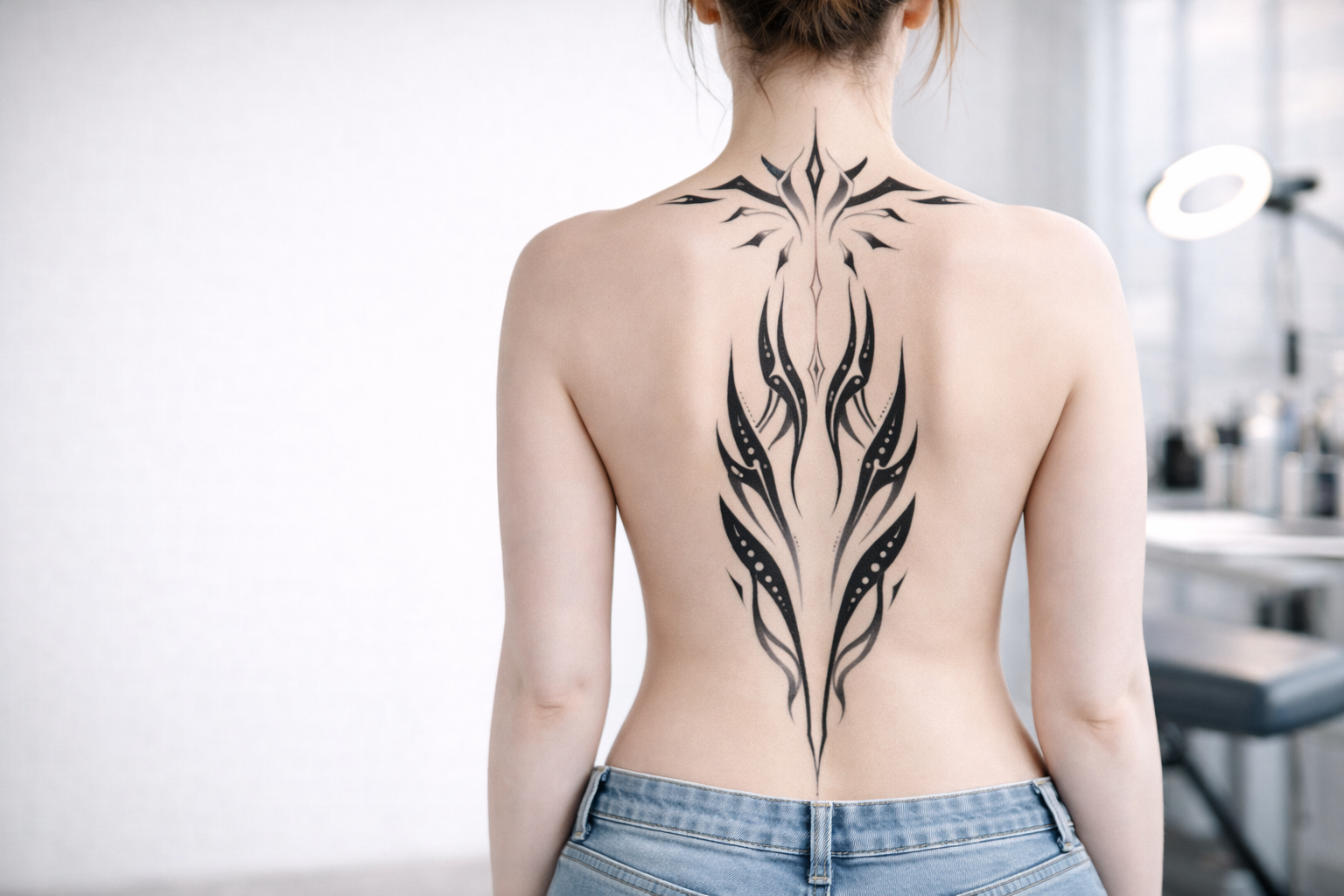
4) Micro-realism accents (small “moments,” spaced out)
Instead of one continuous piece, think: small realistic elements placed with intentional gaps (for example, a tiny object + small botanical + subtle shading).
Why it works: it keeps the design readable and reduces “one long dark stripe” effect.
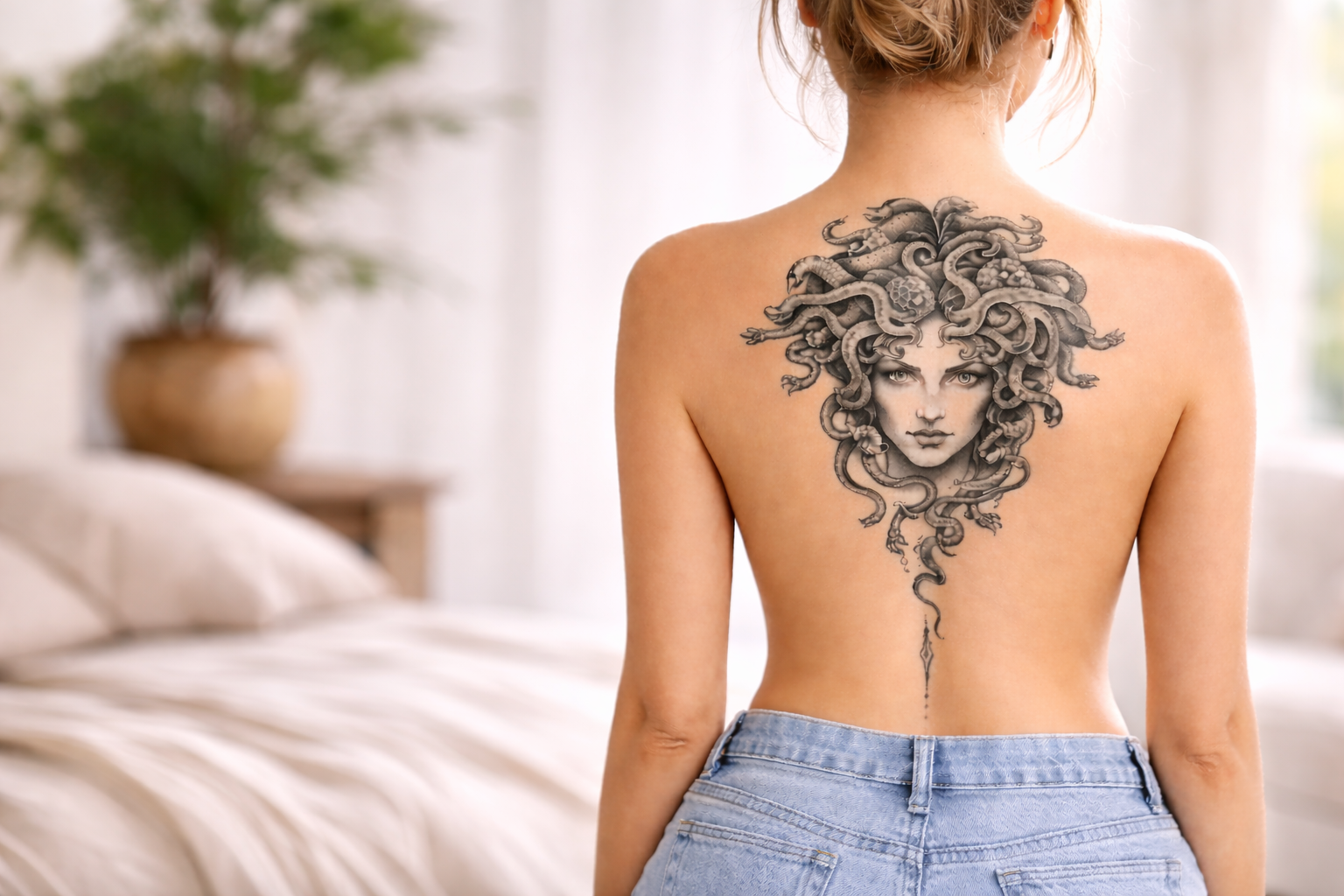
5) Minimalist symbol stacks
A vertical stack of small icons or symbols can be striking and discreet—especially if you want something you can hide easily.
Size & placement decisions (upper vs mid vs lower spine)
Spine tattoos aren’t one placement—they’re a range. Where you land changes comfort, visibility, and design options.
Quick decision guide:
-
Upper spine: great if you want something visible with open-back tops, and easier to “frame” with shoulder symmetry.
-
Mid spine: the classic “center line” look—ideal for long, elegant flow.
-
Lower spine: more wardrobe-dependent (waistbands), and movement can be higher.
Wardrobe reality check (important):
-
If you wear bras often, test how straps and clasps interact with the tattoo zone.
-
If you live in high-waisted bottoms, confirm the lower edge won’t sit right under constant friction.
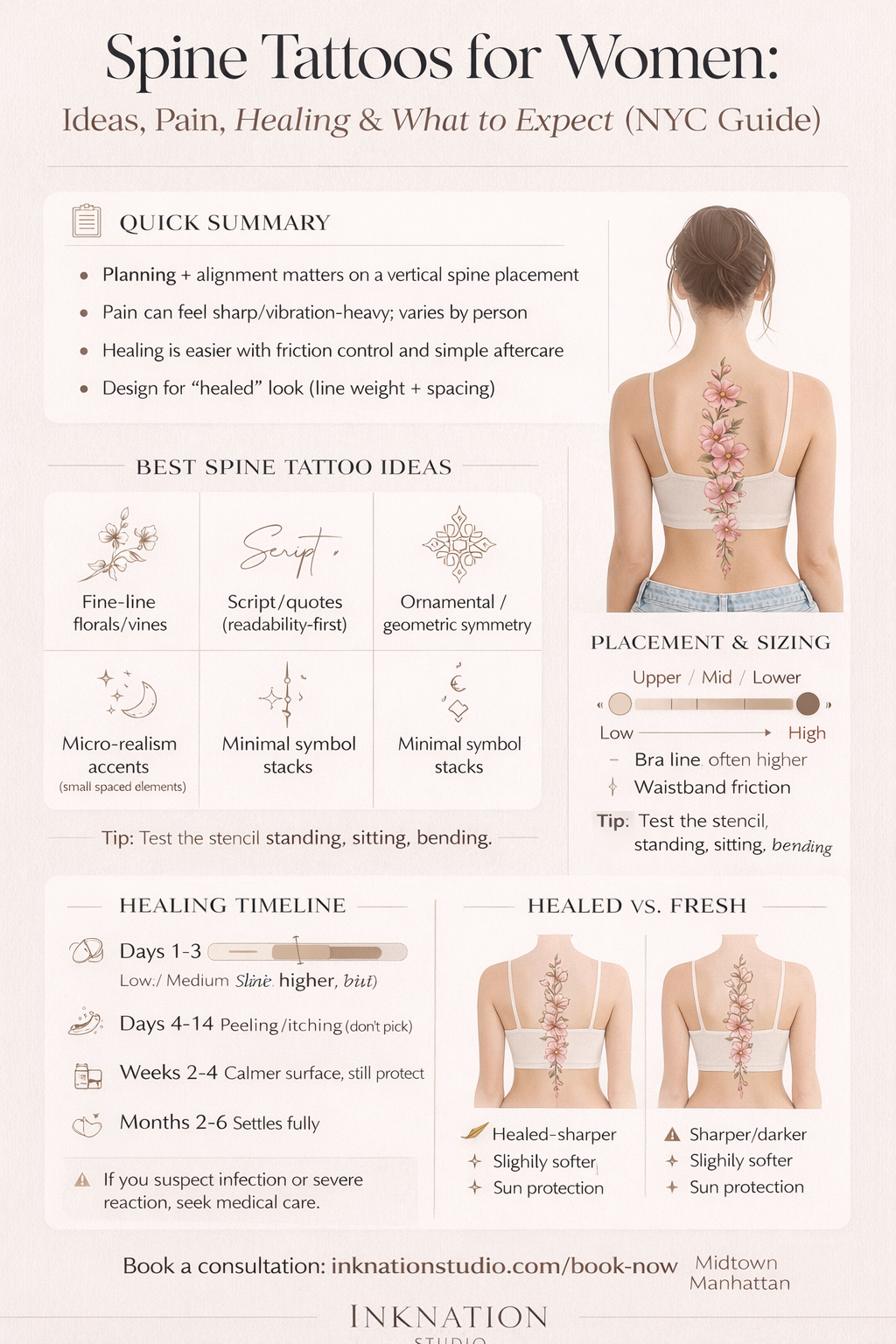
Spine tattoo guide for women: design ideas, pain levels, healing stages, and what to expect in NYC.
Pain & sensation: what people usually feel
Everyone’s pain tolerance is different, but there’s a consistent theme: bony areas tend to hurt more because there’s less padding and often more nerve sensation.
For spine tattoos, people often describe three components:
-
Sharpness (especially right over the vertebrae)
-
Vibration (a deep “buzz” sensation)
-
Endurance (holding still matters more than being “tough”)
Prep checklist (simple, effective)
-
Sleep well the night before.
-
Eat a real meal before the session.
-
Hydrate.
-
Wear clothing that makes back access easy (and won’t rub after).
What to expect: timeline from consult to “fully settled”
Healing varies by size, skin, and placement—but it’s common for tattoos to look healed before they’re fully healed. Many dermatology-guided resources note that full healing can take months, even if the surface calms earlier.
Typical timeline (general guidance):
-
Day 1–3: tenderness, warmth, redness; treat it gently.
-
Days 4–14: peeling/itching phase—do not pick.
-
Weeks 2–4: surface looks calmer; still be careful with friction and sun.
-
Months 2–6: deeper layers continue settling; keep it moisturized and protected.
If you suspect infection or a serious reaction: seek medical care. The American Academy of Dermatology advises seeing a board-certified dermatologist for reactions that persist or worsen.
Healed vs fresh: what changes on spine tattoos
Fresh tattoos look darker, sharper, and sometimes slightly swollen.
Healed tattoos usually look a bit softer and more “settled.”
For fine line and lettering, the biggest win is designing with the healed look in mind:
-
slightly sturdier line weight (so it stays readable)
-
enough spacing between strokes (so it doesn’t close up)
That’s why choosing an artist who plans for longevity matters—especially on a high-sensation, high-movement area like the spine.
Common mistakes (and how to avoid them)
-
Choosing a font that won’t age well → prioritize readability over trendiness.
-
Going too thin for a long quote → thin + long + tight spacing is a common regret.
-
Skipping posture testing → always check standing/sitting/bending.
-
Wearing rough, tight clothing during healing → friction can irritate.
-
Overdoing aftercare → more product isn’t better; follow a simple routine.
-
Sun exposure too early → protect it; UV is a fast track to fading.
FAQ
Do spine tattoos hurt more than other placements?
Often, yes—many people report higher discomfort on bony areas. But it varies person to person.
How long does a spine tattoo take to heal?
Surface healing is often measured in weeks, but full healing can take months depending on size and location.
Can I work out after a spine tattoo?
Ask your artist, but in general you’ll want to avoid heavy sweating/friction early in healing.
Are spine quote tattoos a bad idea?
Not at all—just design for readability (line weight + spacing) and test the stencil in multiple postures.
Will it warp if I gain/lose weight?
Bodies change. Smart placement and design choices reduce how noticeable that change becomes.
Book a Spine Tattoo Consultation in Midtown Manhattan (InkNation Studio)
InkNation Studio is located in Midtown Manhattan at 56 W 45th St, Fl 18, New York, NY 10036. Hours: 11am–6pm daily. Phone: (917) 261-6936.
Ready to plan your spine tattoo?
Book a consultation to confirm sizing, placement, and linework—plus get a posture-tested stencil fitting.
👉 Book a Consultation: https://inknationstudio.com/book-now/
During your consult, we can:
-
Review your reference ideas
-
Choose the right length and line weight
-
Do a posture-tested stencil fitting (standing, sitting, bending)
-
Plan the session realistically
Want to pick an artist first?
Browse the team here: https://inknationstudio.com/artists/